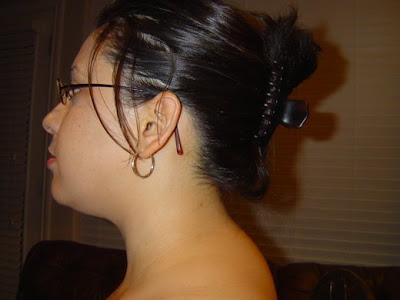
Thursday, May 10, 2012

Day 10: Around the Cushie World in 30 Days


Hi there.  I hope you are enjoying the information and sentiments shared by my fellow Cushie bloggers.


For today's trip, we visit Robin again. She asks, Why do we overeat? Underexercise? Is it a matter of willpower?


I'd like to talk to you a bit about what it is like with Cushing's high cortisol surging through one's system and the hunger it brings.


You can read her blogs at Survive the Journey and 365 with Cushing's.

Wednesday, May 9, 2012

Day 9: Around the Cushie World in 30 Days-- MaryO


Today, I take you to one of my favorite posts from one of my favorite people.  MaryO!

MaryO is a Cushing's survivor and the founder of Cushings-Help.com and a host of internet sites dedicated to understanding the high cortisol to low cortisol continuum Cushies find themselves.  I learned the foundation of everything I know about Cushing's from her message boards and the people who share their  heartaches and knowledge there.  Today, I thank you, as I have said many times before.  Somehow, it just doesn't seem like a big enough word, thank you.  I thank you for all your hard work to keep us Cushies informed and in line.

Today, when I awoke, I suddenly realized that this is the best day of my life, ever! There were times when I wondered if I would make it to today; but I did! And because I did I’m going to celebrate!

You can read all of MaryO's blog posts by visiting her Cushie.info blog, because as she says,
"It's about time there is some support for Cushing's."

Tuesday, May 8, 2012

Day 8: Around the Cushie World in 30 days-- ALICIA


Hi everyone.  I wanted to share a post today from Alicia's blog, entitled Hear Hoofbeats, Think Zebras.  

Alicia write a short but sweet entry about the 20 Things Cushing's Has Stolen from Her.  You can read that post here.

* ~ * ~ * ~ * ~ * ~ * ~ * ~ *

I see so much of myself in these blog posts.  I find it both comforting to see that I am not alone.  Sometimes, you feel so unlike yourself, you wonder if you are going crazy.  Posts from friends make me feel assured that this is not my fault, not our fault.  It is the disease.  Cushing's is evil.


Monday, May 7, 2012

Day 7: Around the Cushie World in 30 Days--How I'm a Better Person Now


Hello everyone. Are you enjoying our trip around to vist with other Cushies?  Good. I knew you would.

Today, I want to take you to see Dawn, a Cushie who started blogging as part of the 30-day Cushing's Awareness Challenge in April.  Dawn, you finished, and you did awesome.  In her post entitled, How having Cushing's has made me a better person, Dawn talks about all the ways Cushing's has affected her life.  I loved that she tagged her post 'bright side of Cushing's.'

Way to go, Dawn!

You can visit read all of Dawn's blog at http://mrszebra.blogspot.com/.

"Girl Disappearing to some secret prison, but she's right in front of me."
This blog is about my journey to beat Cyclical Cushing's Disease and hopefully raise awareness to others so that someday this information could possibly save the life of yourself, a family member, or a friend.

p.s.  I loved her blog decorating motif so much I swiped it!  I promise to find my own template as soon as I can dream up something so good.


Sunday, May 6, 2012

Day 6: Around the Cushie World in 30 Days~Danielle


Hi everyone.  Today, I want to show you how too much cortisol can destroy a body and force it to pack on weight.  I share with you a post from Danielle's blog Life with Cushing's:  my journey through diagnosis, treatment, and aftermath of Cushing's disease.

In her post simply entitled Pictures, Danielle shares with us what happens when one can *stop* cortisol from being overproduced in the body.  Danielle looks AWESOME.  She further charts her weight gain and subsequent loss after her bilateral adrenalectomy here.  

Thank you for sharing and making us part of your recovery and healing!


Saturday, May 5, 2012

Day 5: Around the Cushie World in 30 Days~ eHow is an eDon't

For today's trip around the internet, we visit Cushie blogger Jessica.  Her site is called Brain Tumors can make you Fat!

In her post entitled eHow is not for medical advice!, Jessica takes on a person who purports to know enough about Cushing's to write an article telling others how to get rid of it.  Jessica brilliantly dismantles each false assumption and asks the author to revise the falsehoods about Cushing's

Bravo, Jessica. Bravo.

Friday, May 4, 2012

Day 4: Around the Cushie World in 30 days: Ashley's Pituitary Surgery


Today, I bring to you a profile of my friend Ashley R. She does not blog, but she should.  Ashley and I have been writing each for many many months online.  I have used everything in my arsenal of knowledge to guide her, and she has been an excellent student.  I take my role as Cushie advisor very seriously, and Ashley took my advice and made her own journey shorter as a result. I am very proud of her diligence and persistence, despite being very ill.

I finally met Ashley R. in Los Angeles this past January 2012.  When she saw our shared doctor, Dr. Friedman, I drove her to the appointment.  

Beyond what I have taught her, Ashley R. has been a wonderful teacher to me.  She has become one of many Cushing's patients for whom I have deep admiration.  Most importantly, Ashley R. and I have had many discussions, including how to enhance our outlook in order to create our new destiny without Cushing's and despite Cushing's. We are both committed to moving on to powerful and healthy lives that we have only because of the Cushing's.  For this and many other reasons, I am proud to call Ashley R. my friend.  I find her so compelling that I asked her permission to share her story here for you.  

Ashley R. is having surgery in Houston at the MD Anderson Cancer Center on Friday, May 4 at 8 am.  Please keep her in your thoughts and prayers.

**************


"You have a brain tumor? What the heck is Cushing's Disease?"
by Ashley R. on Thursday, May 3, 2012 at 4:20am ·

I've spent much of the last year being quiet about the changes in my body and mind. Yes, there was chronic illness and debilitating/disfiguring symptoms, but I never really wanted to take ownership of what was going on - it always seemed like an invader to my body. I certainly didn't want to worry anyone unnecessarily and I definitely didn't want to jeopardize any professional contacts by littering my Facebook profile with too much medical information. For the most part, I tried to keep as normal of a schedule as possible.

... but I knew things were changed. I knew that I couldn't keep up appearances for long... so I (as gracefully as I could), withdrew from everything but what it took to survive. If you were a part of my life that didn't make the cut, you likely saw my involvement dwindle. I promise, I wasn't trying to hide. I was trying to survive. I am fighting so I can come back to full involvement. I promise, I'm almost there.

So here I am, about a year and a half out from the initial start of this mess, and I am ready to put pen to paper and explain what happened. Before I start, I need to be laser clear on a few things:

1. I am so grateful for the healing that this journey has brought to my life. This process flipped my world upside down... and in the process, forced me to confront things that I had avoided. 

2. I am confident that this is already cured and I am already healed ... my body is not broken, and this was no mistake. I don't write this for sympathy -- I've already grieved for what I thought I had lost. I write this story today from a place of gratitude... gratitude for my friends and family who have supported me through this and gratitude that I was trusted with this story. My prayer is that I say what needs to be said and that there be no mistaking that Jesus has been in control of the outcome from the beginning. I am at peace with what happened. 

Understanding that, let's start at the present.

Today, I lay in bed in a Houston hotel awaiting my turn to see one of the top neurosurgeons in the country. Tomorrow, I will undergo brain surgery to remove a tumor from my pituitary gland. Today, I pray, is the last day Cushing's Disease is allowed to be in my body.

What is Cushing's Disease?

Ever heard of the stress hormone, cortisol? Cushing's Disease is simply (ha!) an overproduction of cortisol in the body, usually caused by a tumor that overproduces the "give us more cortisol" hormone (ACTH).

Picture for a moment a time in your life when you experienced EXTREME STRESS. Perhaps you went through a trauma of some kind...perhaps you had a point in time where you had too much "critical" stuff to do and not enough time. Picture how your body felt - your muscles twitching between super strong and super goo, your heart beating fast, your head going from clear to mush... your appetite dropping only to hours later leave you ravenous... your body switching to survival mode with only one objective: run away from the tiger before it eats you.

Got it?

Now picture never being able to shut that off.

That, is the only way I can give you a glimpse of what this disease process looks like.

Take a few moments and watch this video - it explains the technical side of things quite well. It is worth the 6 minutes.

How did it happen to me?

I'm not really sure... but as I looked over the patterns in my life, it is entirely possible this is something I've been cycling with since I was a young girl. We started to get suspicious January 2011 when an overwhelming amount of fatigue took over my body and I gained about 30 pounds in 30 days - while dieting, walking 3 miles a day, and regularly practicing EFT to work through the emotional side of things. Something was wrong, something was very, very wrong.

As I scrambled for answers (surely, I had to be doing something wrong), a friend mentioned Cushing's. I scoffed, "now why would I want that? That's not fun."

A few weeks later, Samuel picked me up in San Luis Obispo and drove me to Seattle to be seen and have initial tests run. When the tests came back showing that we were on the right path, the choice was made immediately to move me back to Seattle permanently.

I didn't struggle through doctor after doctor who told me I was crazy. I didn't have the energy for that... I went straight to one of the leading experts on Cushing's Disease. For 8 months, I tested - blood draws, 24 hour urine collections, and saliva tests... Over and over again. Trip after trip to the lab. It was an exhausting and humiliating experience. Scratch that... it was an exhausting and humbling experience.

I tried to stop the process. I tried hard to fight it. When I stopped fighting it, there was a bit of a lull to the process. It made no sense. Throw everything you know about your body out the window. I was gaining weight eating a clean paleo diet and could get the weight gain to stop if I ate crap junk food. It made no sense. None. It still doesn't.

By September, most of the changes in my body had already occurred. I had gained about 150 pounds in a little over 7 months. My waist circumference doubled. My hair fell out. Reddish purple lines striped my arms, shoulders, and chest. Pads of fat seemed to grow both at the back of my neck AND on top of my collarbone. My face COMPLETELY changed. My moods altered and I fought against rage in my body. My skin turned both bright red and orange. Anxiety and paranoia were present daily. 

While I've avoided posting pictures over the last year, I feel like none of these words can quite show the change like this photo can. This my friends, is what the diagnostic process cost me physically. 
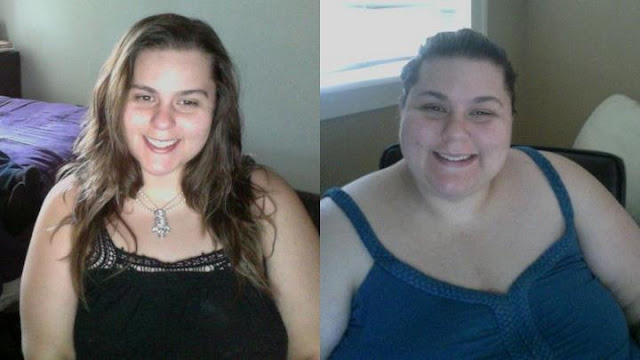
end of December 2010   -------------------------     April 2012

Dramatic, eh?  It was only 16 months.

I've tried (sometimes unsuccessfully) to rationally think through these changes. I've tried to keep perspective - that most of these things I felt were caused by the hormones NOT by real threats. In short: I did everything I could to not BLAME this disease process for any of my shortcomings. There were definitely limitations, but I refuse to give in completely and let this disease process take more than it needed to.

We found the tumor in October via MRI. You'd think, with an ever growing mountain of evidence supporting a diagnosis AND a visible tumor, that the doctors would be clamoring to take that puppy out, right? That just wasn't the case.

Midway through November 2011, I learned that my doctor was retiring his practice and moving in to drug research. I never managed an official diagnosis out of him -- the day he left his practice, he had spent 8 months being "highly suspicious" but never committal. Is this a doctor thing or a man thing? Who knows.
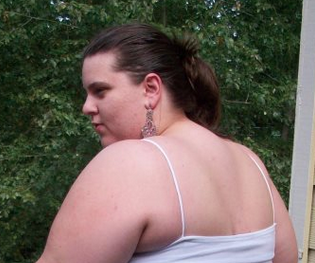
my buffalo hump
In January 2012, I flew to California to see another Cushing's specialist. There were several of you who prayed for and helped fund this trip. I am eternally grateful for your generosity.

When I met one of the doctors the first thing he said to me was, "Why hasn't anyone helped you before now? Why did they let you get this sick?" I do not have an answer to that question.

I spent most of February and the early part of March doing one final blitz of testing. In truth, the doctor likely had enough to make the final call, but needed tests that he had ordered to come back positive to do the whole CYA thing. 

Mid March 2012, almost a year to the day of my first appointment to discuss Cushing's Disease, I had a diagnosis: Cyclical Pituitary Cushing's Disease. 

Over the year and a half of progressively getting sicker, I was asked many times why I fought so hard for a particular diagnosis. After all, most people are traumatized when they hear they have a tumor and a life threatening illness. I, on the other hand was relieved.

I have a short answer to this: I needed 100% written proof, verified by a professional, that I did not intentionally do this to myself. I needed that proof for me... and for anyone else that would raise an eyebrow to me.

Sound strange? Sound selfish? Sound a bit ridiculous? Probably.

You see, I grew up an overweight child. I was blamed, from the age of...oh...8 or 9... for my weight problems. I've had so many labels put on me by doctors that refused to look for something other than a sad child who liked chocolate. I needed the diagnosis because I spent decades hating those responsible for my physical and emotional well being. I couldn't put my finger on it... but I never bought what they were saying.

The Cushing's diagnosis gave me the courage to forgive.

The process to get the diagnosis gave me the ability to appreciate and love my body in a way I can't quite explain - though I am going to try later this week. 

Anyway, here's what's next:

I'll have drive by brain surgery through my nose on Friday... then we pray that it is a cure. The surgery is really easy guys - I promise I am going to be ok... I am at one of the best facilities in the world and have one of the top surgeons in the world. He knows this disease inside and out and is going to take good care of me. Yes, please pray for me and for him for the actual surgery... but also keep my family in your prayers... as they are the ones who have to anxiously await the good news. Dad, Kelly, and Sam are here with me... and my sister is back up in WA (worrying no doubt).

Once I return home, I get a new fight on my hands: the "drying out" process (allowing the cortisol soaked tissues to get rid of the excess stored cortisol) and the "waking up" process (where my body starts producing hormones on its own again). They say the cortisol withdrawal is akin to a heroin addict going through withdrawals. Please pray for me. Please come check on me. This process scares me more than anything else.

Then, we rebuild from a place of gratitude. We learn from the process... and we move forward.

I am overwhelmed by the support, prayers, and generosity of those around me. I am overwhelmed at the humility my husband has shown through the whole process (I love you!). I am overwhelmed by the support of my bosses and coworkers - I've never felt more cared about by any other group of women. I am overwhelmed that women I didn't know came to visit me when I first moved back to Seattle and was lonely because no one was coming to see me. I am overwhelmed by the knowledge I've had the privilege of acquiring. I'm overwhelmed by the courage of the women who have gone before me in this fight - the women who took their time to navigate this process and support me every step of the way. I am overwhelmed that you took the time to read this... and mostly, I am overwhelmed that Jesus has been there through it all, going ahead of me, carrying me, and providing what I needed to come out on the other side of this in a much better place than when I went in.

Thank you so much for everything you've done and for the love you've shown to me.

All my love,
Ashley R.

Thursday, May 3, 2012

Off The PNA Press

I was happy to see the Pituitary Network Association newsletter in my email today. In this short piece, it makes the point I have been trying to make: pituitary tumors change a person's personality. 

Off The PNA Press: Psychological Manifestations of Pituitary Disease

Editor’s note: This is an introduction to a lecture given by Dr. Michael Weitzner. It makes many of the points that the PNA strives to promote.

The objectives of this lecture are to provide an overview of the psychological and neuropsychiatric problems faced by patients with pituitary disease, the impact on family, and the options for treatment.

Cushing, himself, believed that there was a need to differentiate the psychological effects that resulted from the pituitary tumor from those that resulted from the stress of illness. It is now recognized that the hypothalamic-pituitary axis is not only an integral element in the expression of behavior, but also an essential part of the limbic system which controls our emotions.

Many patients with pituitary tumors develop an apathy syndrome which is the result of this interplay between the limbic system and the hypothalamic-pituitary axis. An important task is the differentiation of this apathy syndrome from other psychiatric disturbances which are also seen in patients with pituitary disease. It is well recognized that depression and anxiety are present in many patients with hyperprolactinemia and Cushing’s disease. Personality change and anxiety are commonly seen in patients with acromegaly and hypopituitarism. There are several options for treatment, both pharmacological and psychological. One element that is unfortunately ignored in this illness is the effect on the family. Effective treatment of the patient with pituitary disease included treatment of the family.

Michael A. Weitzner, M.D.
Department of Psychiatry
University of South Florida
Tampa, Florida

www.pituitary.org

Day 3: Around the Cushie World in 30 Days~10 Things I Can't Live Without


For today's featured post, I share with you Robin's post entitled 10 Things I Can't Live Without.  

I find this post particularly important for Cushies, not in the nice-to-know way but the you-can-die-without-it way.  The pituitary gland and adrenal glands' choreographed dance to make cortisol is life-sustaining.  Enter a tumor and friends to tinker with that, it the dance turns ugly real quick.

You see, when people in the general populace talk about things they can't live without, they aren't talking real life and death. They are talking, I'd throw a bitch fit without it, it would make me cranky, I'd be bummed out if... 

Big difference.

We love Robin. She is a science teacher who helps all of us so much.  You can read her blogs at Survive the Journey and 365 with Cushing's.

Wednesday, May 2, 2012

Day 2: Around the Cushie World in 30 days~Let's Talk about our Bodies


Today, I share Gracie's post entitled Let's Talk about our Bodies from her blog called One Day at a Time / A Day in the Life of a Train Wreck.

If we didn't laugh, we'd cry, and well, we did that already.  Here is an excerpt. 

We also often lose a lot of our hair, and it just turns into this frizzy, haystack consistency that you can't do anything with. Oh, and don't forget the big red face! 

When you have Cushing's, you often have a very odd  body odor that no shower and no soap can get rid of.

I feel awkward in my clothes. My belly shows through my clothes. There is no hiding it. It makes me look odd! 

Day 1: Around the Cushie World in 30 days~Things Cushing's has Stolen from Me

As you know, April was Cushing's Awareness Month. I surprised even myself by completing 30 new blogs posts here in 30 days.  I didn't do it like it wanted, ie every day or ahead of time, queued up days in advanced, and on all my favored topics, but I did it.  I went days not feeling well and lying low on the couch and in bed. When the clouds parted, I rushed to complete three to five blog posts in a matter of hours. On those days, I did little else. I am proud I kept my word and finished the challenge. It was difficult, it was challenging, it took every bit of effort for me to complete it. I don't commit to anything anymore because I always have to cancel.  So, I am proud of myself for finishing. Go me.

With over 20 Cushing's patients blogging along with me in the Cushing's Awareness Challenge, we wrote our little hearts out.  I am proud of our group, and I am especially inspired by the perseverance despite illness.

This month, I wanted to share with you a few of the posts that  caught *my* eye and touched my heart. I wanted to share with you the best the Cushing's bloggers have to offer.

For today's blog post, I share with you an emotional post entitled, Things Cushing's has Stolen from Me, from Vanessa's blog, The Dark Side of the Moon:  

Having Cushing's is like being on the dark side of the moon. We are always up at night and rarely feel like we get up on the right side of the bed. There is very little light in our worlds. Even under the moonlight's glow. It's a cold, lonely place.


Tuesday, May 1, 2012

Happy Birthday Rieger kitty

Photo
Today, my cat Rieger Magillicuddy, turns 5 years old.

This is newsworthy to include on my Cushing's blog because my husband bought him for me in 2007, just month's after finding out that Cushing's was the enemy. Husband had read that pets help patients with depression, and I was facing the worst of my depressive symptoms at that time. Soon, we searched the Internet to find one that wouldn't make us allergic. This is what we found: a gorgeous Siberian kit cat, new to the US in 1990.

http://www.cfa.org/client/breedSiberian.aspx

After avoiding cats for my entire life, I now fancy them, well, one in particular.


Happy 5th birthday, my sweet kitty cat Rieger. Our family wouldn't be the same without you.

With love,
Mama and family

P. S. 'Scilla Presley spent a lot of time getting her eyeliner to look like this!

Monday, April 30, 2012

Day 30: A New Way of Thinking


This is the last day of blogging every day in April for the Cushing's Awareness Challenge.

For many months and like many Cushies, I have been feeling so STUCK and HOPELESS.  I felt like nothing I do seems to matter until I can get Cushing's off my back. There is just no need to keep rehashing what I already know: I am sick and uncured.  I KNOW!  Why must I remind myself of it every few minutes of every day?!


Someone recently reminded me that signs are all around us. Our minds must be open to see it, and our hearts must be open to take it in.  During this challenge, I have had many signs signaling to me what I need to do to move forward in my life.


I realize now that I have the world ahead of me, and it is my duty to pump as much life back into my daily living as I possibly can.

Time to learn to live with it because it is part of my life, at least for now.

From now on, I will work to think about myself in a much more positive light.

I will forgive myself more, and I will give myself a break.

I am doing the absolute best that I can each and every day. Some days I can do some things, and on the other days, I will rest and try again another day.

I must be more loving to myself.  I must drop all the guilt I feel about not being the kind of person/ friend/ mother/ wife I want to be, the kind of person that I used to be, not like this person I just met who is fabulous, or anything I wish I could do but can't quite do it now.

That is such a waste of effort!  I tires me, and I am already so exhausted. There is no reason to pile it on more.

I will make more effort to celebrate my caring spirit as I continue to help those around me who learn to live with Cushing's.

I don't do it enough, but I, too, must learn to deal with Cushing's with Moxie... every hour and every day it is with me.  It is the only way I know to continue moving forward and surviving this journey.

Onward,
Melissa

P. S. Just to compare, you can see day one's post for my Old way of thinking.  As for me, I'm not looking back.

Day 29: Dr Friedman's Everything Guide to Thyroid


The Everything Guide to Thyroid Disease: 

From potential causes to treatment options, all you need to know to manage your condition and improve your life

Purchase it on Amazon.com for only $11.

* ~ * ~ * ~ * ~ *

I am a patient of Dr. Theodore Friedman in Los Angeles, California, but like many, I traveled to see him when I lived in Texas.  Dr Friedman is a Cushing's expert and specializes in difficult-to-diagnose cases of the pituitary, adrenals and the entire endocrine system.  Dr Friedman sees five to ten patients with Cushing's each week and has for many years.
Doesn't make it sound that rare, now, does it?

If you are also interested in understanding the ins and outs of the thyroid glands -- overactive (hyperthyroidism), underactive (hypothyroidism), or self-attacking (Hashimoto's) -- I encourage to take a peak at this book.  It may be just what my doctor ordered.

If you would like more information about Dr. Friedman and his practice, read this excerpt from his website, GoodHormoneHealth.com:

So many of us believe that fatigue, weight gain, loss of libido and other problems are just symptoms we must learn to live with.  What if these symptoms are not the result of stress, diet, or aging, but are actually caused by a hormonal disorder?  Symptoms of hormone deficiency or excess may be subtle and difficult to diagnose.  Many hormonal problems are misdiagnosed as depression, especially in women.  


You know your own body better than anyone else, and you know when something is wrong.  Dr. Friedman is a compassionate, caring physician who will listen carefully to your concerns and work with you to establish a treatment plan.  As an experienced, board-certified endocrinologist and researcher, he has the capabilities to diagnose and treat even the most difficult hormonal problems.  Dr. Friedman has found that some of his patients suffer from undiagnosed pituitary or adrenal problems. These include many people suffering from Cushing's disease, which can present a baffling array of symptoms and is frequently misdiagnosed. Other patients may have pituitary or adrenal insufficiency, which has numerous symptoms and is equally hard to diagnose. Dr. Friedman is a world expert in these difficult-to-diagnose diseases and he welcomes inquiries from patients and their physicians.


Day 28: The Buffalo Hump


In the five years since I first learned of Cushing's, I have noticed many discussions among Cushies about their buffalo hump.  Folks just discovering Cushing's are particularly fixated with this discovery.

Who ever knew that an innocent deposit of fat could be a cause of such scorn, concern and distress?

I wrote about my self-guided path to diagnosis back in 2008. Today, I realized I haven't mentioned much about the buffalo hump since that post.  I now realize I have been remiss in not giving the buffalo hump the exposure it necessitates. The people want to know!

The buffalo hump -- listed among other many Cushing's symptoms -- was my a-ha symptom.

Excerpted from the post describing my self-guided path to diagnosis:

Not only did I experience nearly all of the symptoms on the list, I knew when I read the words "buffalo hump" that this was it. I just knew this is what I had.

Here is the buffalo hump picture I saw on the internet:


www.cushings-help.com


Here is my buffalo hump.
www.cushings-help.com
Copyright. Cushing's with Moxie. No reproduction without sourcing.


Copyright. Cushing's with Moxie.
No reproduction without sourcin

I searched the internet to see what else could cause a buffalo hump.
  • Cushing's (overproduction of cortisol caused by tumors in the pituitary or adrenal glands)
  • Long term use of steroids (when persons with normal cortisol production regularly take synthetic cortisol such as prednisone as medication to relieve the symptoms caused by another illness)
  • Pituitary tumor (could be source of Cushing's)
  • Hyperinsulinaemia (could be part of symptomology of Cushing's)
  • Morbid obesity (not on its own, usually part of the symptomology of Cushing's)
  • HIV and AIDS medications
  • Kyphosis (this is so easy to distinguish from a buffalo hump that I can't believe it made this list.  Kyphosis affects vertebrae between the shoulder blades and mid back, while a buffalo hump begins four inches below the hairline along the neck where the tops of the right shoulder and left shoulder meet in the middle.
    You can see kyphosis diagrams here and here.)
    NOTE: I measured my buffalo hump this way: hold up your right hand and tuck away your thumb. Place your four fingers sideways on your neck, with your pinkie touching the bottom of your hairline.  My index finger touches the top of my buffalo hump.
I looked up all the unfamiliar terms, and I knew they didn't apply. It could only be Cushing's.

My hump and me on a good day. We have a roller coaster relationship.Copyright. Cushing's with Moxie. No reproduction without sourcing.
So, to give my buffalo hump the credit it is due, I will share what I have learned about them over the years.

Q:  Is this a really a buffalo hump?
A:  If a person is asking about a buffalo hump, it is usually a buffalo hump.  Small or large, it is a hump. Accept this odd symptom especially when a patient has many other symptoms of Cushing's.

Q:  My doc says my hump is from obesity, but it looks like humps from diagnosed Cushies.
A:  Your doctor probably means well, but s/he hasn't seen as many Cushies as we have in the online community. In the past 60 months studying Cushing's and seeing my Cushie friends as real-time case studies, I have seen hundreds of patients think they have Cushing's, get knocked around in the diagnosis phase, only to have biochemically proven Cushing's with multiple tests (urine, saliva, blood) and/or ACTH-stained pathology from tumor(s) removed in pituitary surgery.
Also, see questions above.

Q:  My hump hurts. Does yours?
A:  Yes, mine kills me! My buffalo hump pulls at my neck making it hard to hold upright some days. I have spent hundreds of visits over the past 15 years at multiple chiropractors always looking for relief from the buffalo hump pain.  It never goes away, but sometimes I get relief for a few days.  Oh, how much money I must have spent in copays at the chiropractor!

I missed many days of work because this thing.  I would wake up and couldn't move my neck.  I couldn't lift my head off the pillow and would have to roll over onto my stomach to then push myself up off the bed just to get myself upright. It was not pretty.

Even today, I experience so much pain from this thing.  I feel a tension running from my neck down my right shoulder and no amount of heat/ ice combinations or stretching will ameliorate the pain. Typically, I have to take pain medication and lie down in order for relief to find me.

Also, my buffalo hump gets hard and soft!  It is so strange!  When the hump feels hard, it is usually causing me some pain.  When it is softer, sometimes I can press down and feel like I am not pressing on bone. It feels looser or softer.  I remember teling a Cushing's specialist about this, and he said, "I hear that all the time, but we don't know what causes the pain in a fatty hump or what makes it go up or down." Hmmphh. Neither do the patients!

Q:  Will it go away after pituitary surgery or when I am cured?
A:  Unknown.  Some say yes, some say no.  My presumption is to make sure your cortisol normalizes before really thinking you are gonna see any change.  That may take years after surgery (-ies).

Q:  My doc says it's a dowagers hump. My mom says it is poor posture. Could this thing really be a buffalo hump?
A:  They are wrong. A buffalo hump and kyphosis bump are located in different places on the spine. See discussion on kyphosis above the photo.  Also, when I take my side profile photos, I stand up super tall, shoulders back, head straight up as if a string is pulling my head up through the ceiling. Guess what? I still have a hump. It is not poor posture.

Q:  What do you do to hide your buffalo hump?
A.  To be honest, I don't hide my hump.  I can hardly drag myself out of bed or make it to the shower daily.  I have to focus on the big stuff, and for me, vanity flew out the window about 100 pounds ago.
However, I have seen others concerned about camouflaging their humps. Some wear their hair long to cover it, while others never wear a ponytail.  Some only wear collared clothes and never collarless clothes.  Again, for me, I can't be bothered by that thing!  Perhaps it helps that I can't see it every day, so really, I kinda forget about it.  Since you really can't do much about yours until your Cushing's is cured, I suggest you just forget it is back there, too. :)

~ * ~ * ~ * ~ * ~ * ~ * ~ * ~ * ~ * ~ * 


I saw this photo comparison for the first time this week. You can also see fat in the patient's neck and cheeks.

~ * ~ * ~ * ~ * ~ * ~ * ~ * ~ * ~ * ~ * 

Yes, this is a real place!  
Buffalo Hump Lake is located in south central Wyoming.

Day 27: Create Awareness by Telling Your Story


We build awareness about Cushing's when we share our own experiences. When others see themselves in our stories, we save that life and any others who learn from that person's experience.

Women & Diagnosis:
Help for Ladies Home Journal Article

Hello Moxie,

At the Pituitary Network Association, we are always hard at work trying to raise awareness for pituitary issues that affect patients like you, family members and physicians each and every day. And now, we need your help!

Most immediately, Ladies Home Journal Magazine is looking for women who were convinced something was medically wrong with them and who diagnosed their own illnesses despite baffled or even dismissive doctors. Ideally, this person should be diagnosed and currently being treated for their condition. If this situation sounds like you and you have a strong, working knowledge of your condition, and can speak about it in detail with the media, we would love to hear from you.

We are also looking to build our database of patient stories for future and ongoing media opportunities and requests. If you would be willing to speak openly about your story to the press, it could greatly help us raise awareness for others going through similar situations.

If you can help with either of the above requests, please e-mail us at info@pituitary.org. We will be in touch with further details.

Thank you!
The Pituitary Network Association is a strong advocate for those fighting pituitary tumors.

Source: Pituitary Network Association, www.pituitary.org

Day 26: Endocrine System Overview


In order to understand Cushing's, a patient must have a solid understanding of the endocrine system.  Today I share with you a very informative site describing the endocrine system.  This site has very cool diagrams; in fact, they are some of the best I've seen.  It includes information I have not seen on any other site that I have found.

The cellular stuff is hard for me to grasp, even after 60 months of living and studying this stuff.  However, I still try to learn.  Don't worry if you can't learn it all either.  For Cushies, learning new information and retaining what we learn or know is one of the most difficult mental tasks we face.  Always just do the best you can.


The Adrenal Glands: where they are and what hormones are made

How the Adrenal Glands Respond to Short-term and Long-term Stress


Sunday, April 29, 2012

Day 25: Another look at Cushing's

For those of you on Facebook, you may recall these Subject Slides going around.  The "What ___ say" part was always the same.  I saw some about Kansas, teachers, military intelligence, and everything else in between.  This is the one I created for Cushing's disease. I consider this one the "nice" one, as friends and family usually say things much more damaging, and doctors are in equal measures just as dismissive and heartless to the patient sitting in front of them.

Photo

Tuesday, April 24, 2012

Day 24: Pituitary Surgery and The Evolution from Open Transcranial to Fully Endoscopic Transnasal Surgery, and Beyond

I have several Cushie friends who recently had pituitary surgery with others headed there within the next few weeks.  For the Cushing's community, we celebrate these surgeries for the milestones that they are.  We rejoice!  After years of misdiagnosis and ill treatment from the medical community and even our loved ones, these are the days a sick person celebrates.

After having two unsuccessful pituitary surgeries myself, I just can't read enough about this process.  Please indulge me as I share yet another post about pituitary surgery.  If you, like me, want more, try this.

Today's Moment of Gratitude:  I'm glad I found out about my Cushing's after they stopped doing craniotomomies!


http://neurosurgery.stanford.edu/pituitary/review.html


Pituitary Surgery: The Evolution from Open Transcranial to Fully Endoscopic Transnasal Surgery, and Beyond
By Mohamed S. Kabil, M.D. and Hrayr K. Shahinian, M.D.


Historical background 

The development of pituitary surgery over the past century is largely credited to the pioneering work of Harvey Cushing in the early 1900s.1,2 Cushing accumulated extensive experience with various operative techniques including transcranial and transseptal-transsphenoidal approaches to the pituitary gland, but ultimately came to favor the transcranial procedure.3, 4 Schloffer in 1907 performed the first transsphenoidal pituitary tumor resection.5 For decades since the introduction of these techniques surgeons have debated which procedure provides the most complete resection of the pituitary lesion with the least risk of complications. Then in the 1960s Jules Hardy introduced intraoperative fluoroscopy and microscopy to transseptal-transsphenoidal pituitary surgery.1,6-8 The improved exposure afforded by these technologies allowed for complete removal of larger pituitary tumors, obviating the need for a complex transcranial operation in most patients. 

As a result, the transseptal-transsphenoidal approach came to be the procedure of choice for the surgical management of most pituitary lesions. Transcranial techniques were reserved for use in the resection of large tumors with extensive parasellar and suprasellar invasion. 

Recently, however, discussions regarding the most effective and least invasive way to perform pituitary surgery have been renewed. Developments in the field of endoscopic surgery have prompted surgeons to attempt endoscope-assisted surgery of the pituitary gland via the traditional transseptal approach.9-20 Recently, some surgeons have developed methods to perform transnasal-transsphenoidal pituitary surgery using only the endoscope for exposure.21-26 This procedure is proving to be equally if not more effective than the microscope as the primary imaging modality in pituitary surgery. 

For large pituitary tumors extending outside of the sella turcica, the transcranial approach offers the greatest chance of complete tumor removal. Often, a transcranial resection is reserved for the second stage of a two-stage operation.27,28 The first operation is performed via microscopic or endoscopic exposure of the pituitary tumor, during which time the bulk of the tumor is removed transseptally or transnasally. Any tumor extending outside the area visualized by the microscope/endoscope, or that is inaccessible during the first operation is then resected in a subsequent transcranial exploration. 

There are two major variations of the transcranial technique that are currently used for the resection of pituitary tumors: Midline Subfrontal Approach and the Oblique Subfrontal Approach. The operation is performed by first making an incision through the scalp, down to the skull on the side of greatest tumor extension. A craniotomy is then performed and the underlying dura incised; the frontal lobes of the brain are exposed and retracted to gain exposure to the tumor. Retraction must be kept to a minimum to avoid post-operative brain edema.27,29,30 Damage to the olfactory nerve can also occur during this operation, resulting in a decreased sense of smell.28,31,32 

Recently, minimally invasive techniques have also been extended to the transcranial approach. These are performed via an endoscopic transglabellar or supraorbital approach. The use of endoscopy allowed thorough visualization of all critical structures at the paramedian skull base without the need for a bicoronal scalp flap, bifrontal osteotomies, or brain retraction.33,34 

Microscopically assisted sublabial-transseptal-transsphenoidal pituitary surgery:

  • Indications: This procedure is indicated in the surgical management of pituitary tumors causing hypo- (not enough) or hyperfunctioning (too much) of the gland that have not adequately responded to medical treatment, or tumors growing into adjacent structures, evidenced by visual or other neurologic changes. Micro- and macroadenomas are amenable to resection by this method, including those with mild supra- and parasellar extension.1,35-39Large parasellar extensions of pituitary tumors, however, are more difficult to manage, as the lateral margins of the microscopic field of view are limited and blind removal of tumor extending beyond the sella is hazardous. Patients with extensive extrasellar extension of their pituitary tumors must be considered for two-stage procedures as described above.28,40,41,42
  • Surgical technique: While an assistant retracts the upper lip, a sublabial incision is made. Intranasal dissection is carried out separating the nasal tissue and removing a section of the central partition of the nose, forming a large "tunnel" through which the remainder of the procedure is conducted. An adjustable retractor is placed into this tunnel; its blades are advanced to the sphenoid sinus.

    The operating microscope is utilized for the remainder of the case, providing magnification and improved illumination of the limited operating field. The anterior wall of the sphenoid sinus is cautiously resected as it boarders the carotid arteries, cavernous sinuses, and optic chiasm. 43-45Once the anterior wall is removed, its mucosal lining is resected, exposing the posterior wall of the sinus (floor of the sella turcica). Benign adenomas usually do not invade the floor of the sella; however, expanding tumors may erode through the floor. If intact, the floor of the sella (posterior wall of the sinus) is removed. Dissection of this region determines the operative exposure, and is crucial for adequate visualization and thorough tumor removal. Deep to the floor of the sella is the dura. A sharp hook or blade is used to incise the dura, and through this incision specialized dissecting instruments are used to remove the tumor. Resection of tumor is carried out until all visually identifiable tumor is removed. As the sella is emptied of tumor, the boundaries of normal pituitary gland are identified.
The hole in the floor of the sella is then plugged using a fat graft from the abdomen, or muscle and fascia graft from the lateral thigh. This plug obliterates the space of the sphenoid sinus and helps prevent post-operative cerebrospinal fluid leakage.46 There are several models of graft design, in most cases a simple fat graft suffices.38,39,47-51 With the fat graft in place, the retractor is removed, the central bridge of the nose and flaps of tissue are repositioned, and the gum line incision is reapproximated using absorbable sutures. Both nostrils are packed with Vaseline-impregnated gauze strips. This packing remains in place for up to 48 hours postoperatively, absorbing any draining fluid and providing structural support to the nose as it heals internally. 

Fully endoscopic pituitary surgery 

With the advent of modern endoscopic equipment, momentum in the field of endoscopic pituitary surgery has stemmed from studies, which show endoscopes provide more comprehensive images of the pituitary gland and its surrounding structures than does the operating microscope.38,52 This in turn should allow for a more thorough tumor resection and fewer associated surgical complications. 

The clinical implications of these findings have been reflected in two separate studies of patients who underwent endoscope-assisted microscopic resections of pituitary tumors.15,47,52,53 These patients underwent a traditional microscopic transseptal-transsphenoidal approach to their pituitary gland tumor. Then, following what the surgeon believed to be complete tumor resection using the microscope, endoscopes were introduced into the pituitary region looking for residual tumor. In both series, an average of 40% of patients were found to have tumor left behind that was only discovered and resected during the endoscopic surveys. In other words, the microscope alone allowed for complete tumor removal in only 60% of patients. 

Improved tumor resection, elimination of intraoral and transseptal dissection along with reductions in operating time, recovery time and complications, have ushered in the completely endoscopic transnasal approach to the pituitary gland as the most recent phase in the evolution of pituitary surgery. 

  • Indications: Indications for fully endoscopic pituitary surgery are identical to those for the traditional transseptal-transsphenoidal microscopic approach.16,23-26
  • Surgical technique: The first step in the endoscopic procedure is to choose the appropriate endoscope. Preoperative physical examination of the nasal passages provides the surgeon with an idea of which endoscopes will be most appropriate. The surgeon must have scopes of varying diameters available, and must improvise intra-operatively depending upon the intranasal and skull base anatomy of the patient.

    Furthermore, every endoscope must be fitted with an irrigation sheath to clear the lens of blood or debris during dissection. This avoids the redundant removal and replacement of endoscopes for cleaning, which is both tedious to the surgeon and hazardous to the patient. The endoscope is attached to the grasping end of the holding arm, advanced into the right nostril, and used to conduct a brief survey of the anterior nasal passageway. The ultimate target of the endoscope is the sphenoid sinus. Therefore, the goal of the intranasal portion of the procedure is to create a passage to the sinus that is wide enough to accommodate the endoscope and accompanying instruments. This goal can be achieved rapidly, but should be meticulously and atraumatically performed, as bleeding from traumatized mucosa anteriorly can obscure visualization posteriorly.
The endoscope is advanced to the anteroinferior border of the middle turbinate. An elevator (dissecting instrument) is used to displace the nasal septum medially and middle turbinate laterally. A long straight suction device may also be introduced to clear the naris of any blood or mucoid secretions. As the nasal passage is widened, the holding arm is released and the endoscope advanced further posteriorly. Ultimately, the anterior wall of the sphenoid sinus is exposed, marking the extent of the intranasal dissection. The mucosal lining of the anterior wall of the sphenoid sinus is dissected away from the bone with a combination suction-cautery device and then lifted from the surface of the bone. Resection of the anterior wall of the sphenoid, the mucosal lining of the sinus, and the floor of the sella (back wall of the sinus) proceeds under endoscopic visualization. The surgical instruments are passed through the nostril, below the shaft of the endoscope, and into the surgical field to gain access to the sphenoid sinus and sella turcica. The same principles of awareness for the limits of dissection apply.16 Injuries to the cavernous sinuses, carotid arteries, optic nerves and chiasm are still possible if caution is not exercised while working within the sinus or sella. 

With the endoscope fixed in the sphenoid sinus, incision of the dura and removal of tumor proceeds as previously described. All imaging up until this point is provided by the 0º endoscope, which provides near complete visualization of the sella turcica, but only a limited view of the suprasellar structures. Therefore, once tumor resection is deemed complete, the 0o scope is replaced with a 30º endoscope. The 30º endoscope is advanced into the sella turcica and rotated clockwise and counterclockwise, thoroughly visualizing the supra- and parasellar regions. Such a comprehensive survey of these regions is not possible with the operating microscope.16,23-26 Tumor remnants in these areas are then removed, thereby eliminating sources of potential tumor recurrence. Resection is considered complete only after examination with the angled endoscope. A fat or muscle graft is then used to reconstruct the floor of the sella as previously described. No postoperative nasal packing is necessary. A small gauze sponge loosely taped beneath the nose collects any fluid that may drain from the nostril. Patients are discharged from the hospital within 24 to 36 hours of surgery. 

Endoscopic transcranial pituitary surgery: 

To minimize the deleterious effects of frontal lobe retraction and to avoid the use of facial incisions, approaches to these tumors have become progressively less invasive. Strategic placement of "keyholes" eliminates the need for excessive surgical manipulation without sacrificing exposure or outcome. 

The introduction of Endoscopic skull base surgery has allowed the resection of these tumors thru two minimally invasive approaches that involve placing a small (2cm) incision either within the skin crease in the bridge of the nose or within the hair of the eyebrow, depending on the exact location of the tumor.34 

  • Indications: For large pituitary tumors extending outside of the sella turcica, the transcranial approach offers the greatest chance of complete tumor removal. Often, a transcranial resection is reserved for the second stage of a two-stage operation.27,28
Endoscopic transglabellar approach to the pituitary gland 

The adaptation of rigid endoscopy to the transglabellar approach broadens the available surgical exposure without the introduction of additional dissection or retraction. Endoscopes of varying angles of view provide a panoramic perspective of the relevant surgical anatomy and allow for thorough evaluation of the extent of intracranial and extracranial disease. The maneuverability of the endoscope allows the surgeon to position it directly at the level of dissection, effectively reducing the viewing and operating distances. Endoscopic imaging thereby facilitates complete tumor resection via a minimally invasive technique. This technique obviates the need for a bicoronal scalp flap or an extensive bifrontal craniotomy without diminishing visualization of the paramedian skull base. 

  • Surgical technique: The patient is placed supine on the operating room table and the head of the bed is slightly raised. Following the induction of general anesthesia, the patient's neck is extended approximately 15° and the head is fixed in place using a three-pin clamp. Thus positioned, the frontal lobes will fall away from the floor of the anterior once cerebrospinal fluid (csf) is drained. The frontal and nasal areas are cleansed with an aqueous antiseptic solution and then draped.

    The base of a pneumatically powered endoscope holding arm is fastened to the operating room table opposite the surgeon; the arm extends over the patient. A 4.0 mm 0° rigid endoscope is attached to the holding arm.

    A 4 cm incision is made between the medial ends of the eyebrows, crossing the nasion in a skin crease. The skin flap is developed in a subcutaneous plane and retracted superiorly. The glabellar periosteum is elevated separately and retracted inferiorly for further use as a pedicled pericranial flap in reconstruction of the skull base. A small burr hole is placed in the frontal bone and the outer table of the frontal sinus is osteotomized. Once the sinus cavity is exposed, its mucosa is resected and the nasofrontal ducts are obliterated. A burr hole is then placed in the posterior wall of the sinus and a second bone flap is removed, revealing the underlying dura. The craniotomy can be extended laterally over the orbital roofs as dictated by the surgical anatomy of the tumor. An incision is made in the dura and csf is liberally drained. With relaxation of the frontal lobes, the endoscope is advanced intracranially along the floor of the anterior fossa between the olfactory tracts. Endoscopic survey reveals the degree of intracranial tumor spread. Extrasellar extensions of tumor are then exposed and removed from this superior approach.

    Prosthetic dural graft material can be used to ensure a watertight seal in dural repair. The pedicled periosteal flap is interposed between the dura and the paranasal sinuses to reconstruct the base of the skull when appropriate. The nasoglabellar bone flap is repositioned using absorbable microplates and screws. The skin incision is closed with careful attention to the aesthetic repair. The patient is monitored in the intensive care unit until neurologically stable and thereafter transferred to the ward until discharge from the hospital.33
Endoscopic supraorbital (eyebrow) approach to the pituitary gland 

Involves placing an incision within the hair of the eyebrow, performing a 1-1.5cm keyhole supraorbital opening and advancing the endoscope along the floor of the anterior cranial fossa underneath the frontal lobe. This approach allows a panoramic visualization of the ipsilateral anterior fossa and a partial visualization of the contralateral anterior fossa. 

  • Surgical technique: Subsequent to the skin and soft tissue incision, a 1.5cm craniectomy is performed. The dura is incised and cerebrospinal fluid drained. The endoscope is introduced thru the keyhole and advanced between the frontal lobe and the floor of the anterior skull base all the way to the tumor. A panoramic view of the tumor is displayed on a flat screen. Using a combination of a custom designed bipolar electrocoagulation system and a micro cavitron ultrasonic aspirator the tumor is gradually resected. This allows a complete and total resection of virtually most anterior skull base tumors through minimally invasive techniques with minimal or no brain retraction. More than 90% of all patients undergoing these procedures are discharged from the hospital within 48 hours.
Conclusion: 

The evolution of pituitary surgery over the past decade has been characterized by a progressive trend toward less invasive surgical approaches to the gland. Innovations in medical technology have, in part been responsible for these advances. The transcranial method was abandoned for the transseptal technique when surgeons documented their ability to achieve equal surgical results without the need for removal of the skull or retraction of the brain. The endoscopic transnasal approach offers even less invasive access to the pituitary gland and surrounding area, in addition to providing better intraoperative imaging of the region. Evidence suggests that complication rates and surgical outcomes of endoscopic pituitary surgery compare favorably to those that have been reported in large series of patients who have undergone microscopic transseptal pituitary surgery.18-21 More extensive data over longer periods of follow-up will further substantiate these trends. It is clear that transnasal endoscopic pituitary surgery represents significant progress in the surgical management of pituitary disease. Furthermore, the endoscopic transcranial approach whether transglabellar or supraorbital to the pituitary gland is an effective adjunct and a far less invasive alternative to the traditional transcranial approaches. 


Glossary of Terms
  • Transcranial: Surgical exposure for pituitary surgery by way of opening the skull (Craniotomy), and retracting the front of the brain to access the pituitary gland
  • Transseptal: Surgical resection of a portion of the central partition of the nose to access the sphenoid sinus. (exposed either transnasally or through sublabial incision)
  • Transglabellar: Surgical exposure for pituitary surgery by way of opening the skull through an opening made at the glabella (the forehead)
  • Supraorbital: Above the orbit (eye socket)
  • Sphenoid sinus: Sinus (cavity lined with mucosa) that lies directly behind the nose and in front of the pituitary gland: the back wall of which makes up the anterior wall of the sella tursica.
  • Transsphenoidal: Surgical dissection through the sphenoid sinus to access the pituitary gland.
  • Transnasal: Surgery through the nostril providing access to the sphenoid sinus and pituitary gland.
  • Sublabial: Surgical incision below the lip, above the front teeth in the gum line, providing access to the nostril, or followed by splitting the palate (bone) to eventually access the sphenoid sinus.
  • Sella Tursica: Bony structure at the base of the skull in which the pituitary gland rests.
  • Intrasellar: Within the sella tursica.
  • Subsellar: Extending below the sella tursica.
  • Suprasellar: Extending above the sella tursica.
  • Parasellar: Extending into the area surrounding the sella tursica: (beside, behind or in front of)
  • Adenoma - Benign tumor - referring to a non-functioning mass in the pituitary gland (this paper)
  • Microadenoma: Small adenoma: Less than 10mm in size.
  • Macroadenoma: Large adenoma: Greater than 10mm in size.
  • Anterior: Pertaining to being in front of another structure - toward the front of the body
  • Posterior: Pertaining to being behind another structure - toward the back of the body
  • Medial: Toward the midline of the body
  • Lateral: Toward the periphery of the body (away from the midline)
  • Carotid arteries: Arteries which carry blood up through the neck, eventually supplying the brain with its major blood supply: these vessels are also found within the cavernous sinus
  • Cavernous sinus: Area adjacent to the sphenoid sinus containing several vital nerves and blood vessels
  • Dura: Thin membrane surrounding the brain, which acts as a bag to contain the cerebrospinal fluid.
  • Cerebral Spinal Fluid/Leak: Clear fluid which surrounds the brain/a hole in the dura which allows the leakage of this fluid (the dura must be opened to access the pituitary gland)
  • Endoscopy/Endoscopic Surgery: Surgery performed using small illuminated lenses on long rods connected to cameras to magnify/better visualize an operating field.
  • Fluoroscopy: Video x-rays
  • Frontal Lobes/edema: The region of the brain in the front of the head which lies above and in front of the pituitary gland/a swelling of some tissue due to injury and accumulation of fluid
  • Indication: Scientific/medical reason for performing a certain procedure
  • Microscopy: Using an operating microscope to better visualize a small operating field or perform delicate surgery
  • Olfactory Nerves: Nerves which connect to the nostrils to provide one's sense of smell
  • Optic Chiasm: Area where optic nerves cross over, located just above the pituitary gland, which can be compressed by pituitary tumors
  • Optic Nerves: Nerves which connect to the eyes providing one's sense of sight
  • Resected: Cut out or removed surgically
  • Turbinate (superior, middle, inferior): Bony prominences in the nasal passage way
Click here for article references.