Thursday, January 27, 2011
Plain ol' Obesity or Cushing's?
**********
In the unique case which will strengthen the confidence of the World in the abilities of Indian doctors, team of specialist Fortis Hospitals Mulund correctly diagnosed and treated a 35 year old US national Ms Michelle Hardin of brain tumor. The US doctors had earlier diagnosed the condition as a case of obesity and recommended Gastric Bypass Surgery.

click to learn more
In the last few years Ms Hardin’s weight increased from 190 pounds to 300 pounds (86 kg to 136 kg). She also suffered from diabetes and hypertension. “I tried various diet control measures but to no avail. Also I had excessive thirst and would drink almost 8 liter of liquid daily and would feel always hungry. My obesity caused breathing difficulty (sleep apnea) and for which I used a special machine (CPAP Machine) to keep oxygen under pressure. Seven months back I took an expert opinion in US, where I was asked to undergo Gastric Bypass Surgery (GBS) to treat obesity. Since GBS was very expensive in US, I thought of undergoing the treatment in India.” Ms Hardin
Ms Hardin decided to visit Fortis Hospital to consult Dr Ramen Goel who has a vast experience of performing thousands of advanced laparoscopic surgeries including bariatric surgeries.
“Ms Hardin visited us with the known fact that she had to undergo Bariatric surgery through Gastric Bypass method. Detailed investigations at the hospital however revealed that she actually had a Pituitary Tumor on the right side of the pituitary gland of about 1cm in diameter. The weight gained was actually because of this pituitary tumour and not because of any case of obesity. I referred her to Dr Milind Vaidya, Consultant Neurosurgeon who has an expertise to remove the tumour through minimally invasive procedure.” said Dr Ramen Goel.
Dr. Milind Vaidya, Consultant Neurosurgeon, Fortis Hospitals Mulund said, “The tumor, situated in pituitary gland at the base of the brain, triggered excessive production of cortisol hormone by the adrenal glands leading to complications like uncontrolled diabetes, hypertension and weight gain. We treated her by transnasal- transsphenoidal excision of the pituitary tumor (a minimally invasive procedure) on 14th Jan 2011.”
Dr Vaidya used an endoscope & microscope to reach the tumour through her nostrils. He used both the nasal openings to reach the tumour to avoid incision or scar. He took special care to remove every bit of the tumour, to achieve cure and preserve the normal pituitary gland.
Ms Hardin had an uneventful excision of the right sided tumor and the normal pituitary on the left side was left untouched. Her nasal pack has been removed and she is doing well post-operation, with diabetes & hypertension under good control.
“I was shocked to learn that I suffered from tumour. I thank the doctors of Fortis Hospital. Had there been no timely intervention from them I wouldn’t know what would have happened to my life. Post operative my thirst & appetite have reduced markedly to normal levels. Doctor assured that my weight will be restored to normalcy gradually.” Ms Hardin.
According to Dr Vaidya, “Ms Hardin’s life is today safe and secure only because of timely detection. Had we continued the treatment of GBS or had we wrongly diagnosed the case, her condition could have been critical. Hence timely detection and right expertise is very crucial. This case is a testimony to the quality and credibility of Indian Healthcare expertise.”
Today India is considered as the best treatment destination by foreign patients as they can avail the finest medical facilities at affordable rates. Fortis has partnered with Indushealth in the US who has played a significant role in helping many such international medical travelers avail quality healthcare services at Fortis.
From http://fortishospitals.wordpress.com/2011/01/25/diagnosed-for-obesity-surgery-in-the-us-35-year-old-american-lady-weighing-136-kg-was-correctly-detected-of-brain-tumor-at-fortis-hospitals-mulund/


Saturday, January 22, 2011
Fighting Fire with Fire? Just leave me alone!
Thursday, January 20, 2011
Doctors unlikely to spot Cushing's
Anxiety and Endocrine Disease
"The first step in defining whether an anxiety disorder is due to a general medical condition is to establish the presence of a general medical condition that is often associated with the production of anxiety symptoms. The DSM-IV defines the most common endocrinological conditions associated with anxiety states as hyper- and hypothyroidism, hypoglycemia, pheochromocytoma, and hyperadrenocorticism. Anxiety may also occur following the exogenous administration of estrogens, progesterone, thyroid preparations, insulin, steroids and birth control pills. Popkin, in addressing the issue of endocrine disorders presenting with anxiety, suggests that anxiety states frequently occur in association with adrenal dysfunction, Cushing's Disease, Carcinoid syndrome, hyperparathyroidism, pseudohyperparathyroidism, hyperglycemia, hyperinsulinemia, pancreatic tumors, pheochromocytoma and thyroid diseases including hyperthyroidism, hypothyroidism and thyroiditis. Popkin cautions that prospective, carefully controlled studies on the etiology of anxiety in these conditions are lacking. The studies that are cited are almost exclusively case reports. He argues for more structured and careful research into the organic basis of these conditions.
Jefferson and Marshall identified hyperthyroidism, hypoglycemia, pheochromocytoma, and hyperadrenalism as the medical illnesses most often associated with anxiety symptoms and most frequently misdiagnosed initially as a primary anxiety disorder.
Hall et al in a study of medically induced anxiety disorder found thyroid disorders, i.e., hyper- and hypothyroidism and thyroiditis, to be the most frequent medical conditions misdiagnosed as primary anxiety disorder.11 Other common medical causes for anxiety in their study included hypoglycemia, Addison's and Cushing's Disease, hyper- and hypoparathyroidism, and diabetes mellitus. Rarer causes included various virilizing tumors and hypo- and hyperpituitarism.
Differentiating Anxiety Associated with Medical Illnesses from Primary Anxiety Diseases
After the clinician has established the presence of a general medical condition known to be associated with significant anxiety symptoms, he/she should undertake a careful and comprehensive assessment of the factors necessary to link the two conditions. Although there are no absolute guidelines, certain associations are helpful in establishing this connection. Are the onset of the symptoms temporally related? Is there a temporal association between the exacerbation or remission of the general medical condition and the enhancement or abatement of anxiety symptoms? Do anxiety symptoms disappear when the primary medical condition is treated? Are features that are atypical of a primary anxiety disorder present such as the usual age of onset, the initial presentation, type of onset, or an absence of family history? The clinician should also judge whether the disturbances that are present may be better accounted for by the presence of a primary anxiety disorder, a substance induced anxiety disorder, or an adjustment disorder brought on by the diagnosis of a primary medical condition.
In earlier work, reviewing patients who were felt to suffer from psychiatric symptoms caused by primary physical illness, Hall et al found that neurological and endocrine disorders were etiologically responsible for half of the medically induced anxiety symptoms encountered. In comparing these patients to patients with primary anxiety disorders seen in clinic, certain characteristics differentiated the patients with organic anxiety from those who suffered from a primary or psychogenic anxiety disorder. 1.) Patients with anxiety secondary to underlying medical illnesses tended to have disease characteristic fluctuations in the severity and duration of their anxiety or panic attacks. 2.) There was a clear cut association between the progression of their anxiety and their underlying disease. 3.) Medically induced anxiety disorders were most likely to have onset before the age of 18 or after the age of 35 in patients with a negative personal and family psychiatric history of anxiety or affective disorders and in patients who had not previously suffered from anxiety symptoms."
Wednesday, January 19, 2011
Fitness fanatic goes from size 10 to 18 in weeks after pituitary gland tumour | Mail Online
Friday, January 14, 2011
Trip Recap


Monday, January 10, 2011
Making Good Use of our Time Away
("Bridget Jones", "Pride and Prejudice") Thursday, January 13, 2011 at 11:30 a.m.
(6714 Hollywood Blvd, near McCadden) Cushies, you can check the schedule to see who will be here the week you have your appointment out here. Heck, you can schedule your doctor appointment around this schedule! Hahaha CELEBRITIES ABOUT TO RECEIVE STARS ON THE HOLLYWOOD WALK OF FAME The celebrities listed below will appear in person on Hollywood Blvd or Vine Street to receive their stars. (Except, of course, for those awarded their stars posthumously). http://www.seeing-stars.com/Calendar/index.shtml#WalkOfFame


Life as a Cushie


Heading for Help
Many Cushing's patients have guided my decision to try this doctor. He is a cushing's specialist. These patients blazed the path, and I thank them for all of their efforts to help fellow Cushies.
I will be updating from LA. I hope it will helpful and informative to go on my trip with me.
-- mm
Sunday, January 9, 2011
GET YOUR LABS THROUGH AN APP :)
Saturday, January 8, 2011
HERstory: A look back
Change's a-Comin'
Friday, January 7, 2011
Erella's Story
Cushing's documentary
SOS: Help a Cushie
Thursday, January 6, 2011
New test for the Growth Hormone Deficient?
Saturday, November 13, 2010
GUEST POST: Best Kept Secret in Medicine
******************************
~IMPORTANT PLEASE READ~ Ms. McGraw is a patient advocate, professional speaker and published author. As a volunteer she facilitates the Pituitary and Brain Tumor Patient Support Groups for the Brain Tumor Center at the John Wayne Cancer Institute. All comments are based on Ms. McGraw's personal experiences and she is not responsible for any miscommunication. Ms. McGraw is not a medical professional. Always consult your own medical doctor.
Hello everyone!
*(melissa says, "then share it with all your friends on facebook!"
~IMPORTANT PLEASE READ~ Ms. McGraw is a patient advocate, professional speaker and published author. As a volunteer she facilitates the Pituitary and Brain Tumor Patient Support Groups for the Brain Tumor Center www.brain-tumor.org at the John Wayne Cancer Institute. All comments are based on Ms. McGraw's personal experiences and she is not responsible for any miscommunication. Ms. McGraw is not a medical professional. Always consult your own medical doctor.
Friday, October 29, 2010
RIP Janet
My heart breaks for Jennie, Janet, and their entire family. I am sorry for your loss, and I am sorry that the medical community failed your family.
Thank you Jennie, for sharing this story. In your honor and hers, I will share this story here on my blog, in hopes of saving someone's life.
The Cushing's community *must* continue to generate awareness for this devastating disease, and we must lead the medical community by example.
No life should be lost to this preventable disease. ~mm
Jennie Whitehead Brick wrote:
My sister, Janet Whitehead Mitchell, died Sept. 16, 2010 of Cushing's Disease. The autopsy revealed that she had cancer of the pituitary gland. She is only the 140th person in medical literature to have cancer of the pituitary gland. She was 59 years old. She had many of the symptoms of Cushing's for a few years, but ...was diagnosed just a few days before her death. I will do what I can to spread the word about Cushing's in the hope that someone else will get diagnosed earlier on in their fight with the disease.
Click here and scroll down to see Janet's high school photo and click here to see the photo from her obituary.
Sunday, August 29, 2010
Collection of Cancerous Brains Helps Show Neurosurgery’s Rise
Dr. Harvey Cushing, one of America's first neurosurgeons, kept extensive samples of his work, but many of the details have been lost. The brains and photos that are on exhibit at the Cushing Center at Yale University are believed to have been made as part of the patients' medical records. The collection includes photos taken of patients before and after operations, tumor specimens, and microscope images. In total, there are almost 10,000 glass plate negatives of patients treated by Dr. Harvey Cushing between 1902 and 1933.
Collection of Cancerous Brains Help Show Neurosurgery's Rise
August 23, 2010
Inside Neurosurgery’s Rise
By RANDI HUTTER EPSTEIN, M.D.

NEW HAVEN — Two floors below the main level of Yale’s medical school library is a room full of brains. No, not the students. These brains, more than 500 of them, are in glass jars. They are part of an extraordinary collection that might never have come to light if not for a curious medical student and an encouraging and persistent doctor.
The cancerous brains were collected by Dr. Harvey Cushing, who was one of America’s first neurosurgeons. They were donated to Yale on his death in 1939 — along with meticulous medical records, before-and-after photographs of patients, and anatomical illustrations. (Dr. Cushing was also an accomplished artist.) His belongings, a treasure trove of medical history, became a jumble of cracked jars and dusty records shoved in various crannies at the hospital and medical school.
Until now. In June 2010, after a colossal effort to clean and organize the material — 500 of 650 jars have been restored — the brains found their final resting place behind glass cases around the perimeter of the Cushing Center, a room designed solely for them.
These chunks of brains floating in formaldehyde bring to life a dramatic chapter in American medical history. They exemplify the rise of neurosurgery and the evolution of 20th-century American medicine — from a slipshod trial-and-error trade to a prominent, highly organized profession.
These patients had operations during the early days of brain surgery, when doctors had no imaging tools to locate a tumor or proper lighting to illuminate the surgical field; when anesthesia was rudimentary and sometimes not used at all; when antibiotics did not exist to fend off potential infections. Some patients survived the procedure — more often if Dr. Cushing was by their side.
Most of the jars contain a single brain; a few hold slices of brains from several patients. Some postoperative photographs next to the jars show patients with tumors bulging from their heads. When Dr. Cushing could not remove a tumor, he would remove a piece of the skull so the tumor would grow outward rather than compress the brain. It was not a cure, but it relieved the patient of many symptoms.
Dr. Cushing, born in Cleveland in 1869, was an undergraduate at Yale and finished his career here as a professor of history of medicine. In between, he went to Harvard for medical school, did his early surgical training at Johns Hopkins and became a surgical professor there, and then spent most of his career as chief of neurosurgery, a new specialty, at Peter Bent Brigham Hospital at Harvard (now Brigham and Women’s).
When he began operating in the late 19th century, a few other doctors were also venturing into the brain, but for the most part the patients did not survive the procedure.
“In the first decade of the 20th century, Harvey Cushing became the father of effective neurosurgery,” the medical historian Michael Bliss wrote in “Harvey Cushing: A Life in Surgery” (Oxford, 2005). “Ineffective neurosurgery had many fathers.
“Cushing became the first surgeon in history who could open what he referred to as ‘the closed box’ of the skull of living patients with a reasonable certainty that his operations would do more good than harm.”
Sometimes doctors went into the brain and could not find the tumor. Sometimes they talked to patients during surgery. Dr. Cushing, for one, often used only the local anesthetic Novocain. (The brain itself does not have pain receptors, but having one’s skull cut open must have been agonizing.) Mr. Bliss writes that in 1910, midway through a 10-hour operation on the renowned physician and Army Gen. Leonard Wood, Cushing wanted to stop operating and continue another day, but General Wood — fully alert — begged him to continue.
Dr. Dennis Spencer, the chairman of neurosurgery at Yale and the Harvey and Kate Cushing professor of neurosurgery, said Dr. Cushing’s major accomplishment was “his meticulous operative technique.”
“Whatever approach he was going to use to get to a tumor,” Dr. Spencer said, “he had this incredibly good judgment in terms of where the tumor was, getting there without harming the brain and then getting out.”
Brain surgeons in those days were medical sleuths, relying largely on patients’ accounts of their symptoms to figure out where the tumor was. Dr. Cushing popularized an eye exam that took advantage of the specific ways in which different tumors can distort vision — a strategy used into the 1970s, when M.R.I.’s and other imaging tools replaced it. Even today, many tumors in the pituitary gland, which straddles the optic nerves, are initially detected because patients have trouble seeing.
Dr. Cushing also discovered that pituitary tumors could lead to vast changes in the body. Cushing’s disease and Cushing’s syndrome — two illnesses linked to hormones gone awry — are named for his discoveries.
Indeed, comparatively little progress has been made since Dr. Cushing’s time in actually prolonging life in brain-cancer patients. “It is fascinating how far we’ve come in terms of technology but not really in terms of progress for most malignancies,” Dr. Spencer said. “Everything we’ve done in the last 100 years has changed the progress for malignant brain tumors very little, extending life maybe eight months to two years.”
He added, though, that “in many tumors we are getting closer to the genetic understanding, and I’m optimistic in the next 10 years we will make a lot more progress.”
In addition to his medical achievements, Dr. Cushing won a Pulitzer Prize in 1928 for his biography of his mentor, Dr. William Osler. He devoted his life to his work, leaving little time to his five children. His three daughters gained notoriety for their marriages — one to James Roosevelt, a son of President Franklin D. Roosevelt, whom she divorced, later marrying the publishing plutocrat John Hay Whitney; one to William Vincent Astor, heir to a $200 million fortune, whom she divorced, later marrying the painter James Whitney Fosburgh; and the youngest to the Standard Oil heir Stanley Mortimer Jr., whom she divorced, later marrying the CBS founder William S. Paley.
The collection expanded while he moved from Johns Hopkins to Harvard and eventually Yale, where they ended up in dusty storage bins before their recent $1.4 million restoration, partly paid for by money from a former patient’s family. The brains and their records were a “complete mess,” recalled Dr. Gil Solitaire, a professor of neuropathology at Yale in the 1960s who once shared an office with some of the Cushing paraphernalia. “Some were totally dehydrated, and the jars were cracked.”
In 1979, the specimens were moved from the bowels of the hospital to the basement of the medical school’s dorms. It was there that the students in the 1990s started a Brain Society — with membership extended to anyone who had the nerve to sneak into the dank basement, walk through the cluttered hall of brains and sign a poster, which now hangs in the Cushing Center.
“It was a rite of passage,” said Dr. Tara Bruce, now an obstetrician-gynecologist in Houston, who became a society member during her first year of medical school in 1994. “Everyone went to see the brains. It was surreal. I had just got to Yale and I remember thinking, ‘I guess Yale has so much great stuff that they can just shove a bunch of brains in the basement.’ ”
Dr. Christopher J. Wahl, an assistant professor of orthopedics and sports medicine at the University of Washington, wrote his thesis about the brains when he was a Yale medical student, stirring an interest in the restoration.
“The most incredible thing is that it’s not just the physical documentation of the founding days of neurosurgery but a social document,” Dr. Wahl said. “The bravery of these patients that really had nowhere to turn and this guy who was — cowboy is the wrong word, but an incredible innovator who was doing things at the right time and place.”
The Cushing collection in the Cushing/Whitney Medical Library at Yale University at 333 Cedar Street, New Haven, is open to the public Monday through Friday, 8 a.m. to 8 p.m.; Saturday, 10 a.m. to 8 p.m.; and Sunday, 9:30 a.m. to 8 p.m. (203) 785-5352.
Sunday, August 8, 2010
Apathy and Pituitary Disease: It Has Nothing to Do With Depression
I want to share a medical article Susan posted today. She is an active member of the message boards. We frequently share peer-reviewed medical literature, always in an attempt to understand our disease better. These "Cushies" know more about Cushing's than many, MANY endocrinologists.
I encourage you to click through and read the article below. I will excerpt a few passages here.
Apathy and Pituitary Disease: It Has Nothing to Do With Depression.
J Neuropsychiatry Clin Neurosci 17:159-166, May 2005. Michael A. Weitzner, M.D., Steven Kanfer, M.D. and Margaret Booth-Jones, Ph.D. Tampa, Florida. © 2005 American Psychiatric Press, Inc.
ABSTRACT
Increasingly, patients with pituitary disease are evaluated and treated at cancer centers. In many ways, these patients resemble patients with other malignant brain tumors. Although the majority of pituitary adenomas are benign, the physical, emotional, and cognitive changes that these patients experience on their well-being is malignant. Pituitary disease causes a variety of physical illnesses resulting from the alterations in the hypothalamic-pituitary-end organ axis. In addition, patients with pituitary diseases may experience many emotional problems, including depression, anxiety, behavioral disturbances, and personality changes, above and beyond the many reactions these patients may have to the myriad of adjustments that they must make in their lives. There is a growing understanding that pituitary patients may experience these emotional problems as a result of long-term effects that the pituitary tumor itself, treatment, and/or hormonal changes have on the hypothalamic-pituitary-end organ axis. The authors present a series of cases, in which patients with pituitary disease were diagnosed and treated for depression and showed little response to the treatment for depression. When the diagnosis of apathy syndrome was considered and treatment implemented, the patients’ condition improved. A review of the literature on apathy, hypothalamic-pituitary-end organ axis dysfunction, and treatment for apathy syndrome is included.
CASE SERIES
Case 4 (BLOGGER NOTE: This is totally me! I moved it to the top spot because this is a "cushie.")
Ms. D is a 36-year-old married Anglo woman, employed as a nurse, diagnosed with an ACTH-producing pituitary microadenoma in 1992. She was treated surgically following a brief period of hormone deficiency. At the time of her psychiatric assessment, however, she had regained full hormonal function. Ms. D reported that since regaining her hormonal function she noticed some "dragginess." She reported there were times when she did not feel very motivated, and she thought that it took much more energy for her to do her normal activities. She reported that when she would take pseudoephedrine for sinus problems, she would see things "with more clarity" and that she would be able to be more focused in her attention and her ability to complete her tasks. Otherwise she tended to procrastinate and get distracted from various tasks.
Case 1
Mr. A is a 48 year-old Anglo lawyer and architect, diagnosed with a pituitary adenoma (clinically nonfunctioning) and treated with a transsphenoidal resection in 1997. He first noted memory problems in 1991 that worsened over the years, causing problems such as concentration and focused attention. He reported problems such as getting lost in familiar places and forgetting the names of people he had known for many years. He believed his thinking process was slow and he was "not as quick on the uptake" as before. He reported that he had an excellent memory, never having to use a reminder book of any kind prior to these symptoms.
Case 2
Ms. B is a 55-year-old Anglo homemaker with a history of a prolactinoma, diagnosed 15 years before her psychiatric evaluation. She reported that her symptoms of the tumor were primarily mood swings, headache, and loss of menstrual periods. She underwent surgery followed by radiation therapy, ultimately developing panhypopituitarism. Since then, she has been managed on hormone replacement, but she began to notice short-term memory difficulties. She reported difficulty finding the right words to express her thoughts. She also noticed difficulty in concentration and focused attention. She reported occasional fatigue and depressed feelings. She reported intermittent suicidal thoughts when she reported the depressed mood, but no active plans of suicide were reported during those times.
Case 3
Ms C. is a 47-year-old Anglo woman, employed as a management supervisor and diagnosed with a pituitary macroadenoma (clinically nonfunctioning) in 1994. She underwent transfrontal surgical resection and did not receive any postoperative radiation treatment but did develop panhypopituitarism. Since 1996, several changes in her behavior and personality were noted. Prior to the tumor she was a very active person. She was able to do very well at work and maintain a leadership position. She could do multiple tasks at once and received a lot of satisfaction from her work. However, after her surgery and recovery, she noticed that she was no longer able to multitask. She was deriving less satisfaction from her work and experienced transient periods of sadness. However, she was most concerned about her lack of energy and motivation. When she was able to work, she had to organize her activities very thoroughly and continuously write down everything in order not to forget what her tasks were. It took a lot of mental energy to function, and after work she would often need to take a 2-hour nap when she returned home. She showed no motivation to adequately take care of her home, including normal household chores. She reported she was not able to muster up much enthusiasm to interact with her grandchild because she was concerned about her energy and drive.
OH YEAH: There was one other time I felt skinny
Boston, Massachusetts, May 2010


Austin, TX, July 2010


WANNA LOOK LITTLE: Get next to something bigger!

Saturday, August 7, 2010
Tell me all about yourself
It is difficult to see your body change when you are doing nothing to provoke it.
It is difficult to see your body betray you.
It is difficult to admit that your body is no longer your own.
So, while I'm getting my ducks in a row to update and share lots of good Cushing's info, maybe you can tell me more about YOU. Who are you, and why do you follow me on this blog?
I would love to have some guest moxie posters. Email me at moxiemelissa at symbol gmail.com, and tell me your story. I would love to post it here to share with others. If that is okay, please be sure to let me know in your email.
Have a good weekend.
Melissa
Saturday, July 17, 2010
Pay No Attention to the Girl Behind the Smile
Pay no attention to the girl behind the smile (full article).
Article written by Christine Miserandino, © butyoudontlooksick.com
What can I say, It is the “secret society of the sick” and I am proud--but not lucky to be a--member.
I hate having to defend that I am a good mother, wife, daughter, sister, or friend.
It is a dizzying, exhausting dance to be two different people. I guess I have grown up a bit. I quite simply do not have the desire to act anymore for you. This is who I am. Good days and bad. Sometimes, there will be days where I am the funny, cute girl that you just can’t believe is sick. Then another day or week later- I may be that really sick girl who used to be funny. It’s all when you catch me.
I am doing my best.
There are so many things I wish people knew about me but I won’t say, because you don’t ask; and when you do, you’re not truly listening.
Pay no attention to the girl behind the smile.
Friday, July 2, 2010
AFTER CUSHING'S: Wish and Do List
If there is one GOOD thing about having a chronic disease that makes you as hopeless as Cushing's does, it is that I have had lots and lots of time to sit and wish and wonder.
SIT because my weak leg muscles, caused by documented adult growth hormone deficiency, keeps me from walking or running or many other activites.Shoot, I can't even stand in my own air conditioned kitchen for longer than 10 minutes at a time. That's sad.
WISH for a change so that I won't be trapped in a broken body that doesn't match my vibrant spirit.
WONDER when I will ever get to do what *I* want to do again, do the things that make me *me*, and wonder, if given that chance, what would I want to do.
I know me, and when I am down in the dumps, I really need to focus on something positive. Not just teensy weensy positive. Big mama gargantuan monolith o' positive.
I decided to share things as I think of them, things that I hope to do once my bod is both physically and mentally ready to do them. I hope that day is soon. For you, I hope you can find it in yourself to galvanize your wants and dreams, and even with this awful disease, feel like they are still close enough to reach out and touch them.
You see, I have a love for language, cultures, and photography. Cushing's disease has kept me grounded for the last 10 years, and I am just itching to get back out in the world--to explore and to live. Who wants to go with me? ~mm
National Geography Expeditions' Photography Workshops and Expeditions

For more than a century, people have thumbed through the pages of our magazines and felt inspired by some of the best photography in the world. Now we’d like to invite you to travel to incredible places with some of the best photographers in the world. Our Photography Expeditions are designed for photographers of all levels. You’ll learn tips and techniques while exploring fascinating places with one of our renowned photographers. Our Photography Workshops, also led by a top National Geographic photographer, cater to those who seek more intensive instruction, and build photo editing, instruction, and critique sessions as well as photo assignments into each day’s schedule.
Doesn't this sound awesome?!
Another thing that makes me happy is thinking about travel. I love all the possibility, the expectation, the wonder. I love it all. Rick Steves' Travel Philosophy captures it better than I could ever say it. The intensity of travel: I love it, and I need it.
Rick's Travel Philosophy (excerpt)
Travel is freedom... one of the last great sources of legal adventure. Travel is intensified living with maximum thrills per minute. It's recess, and we need it.
Extroverts have more fun. If your trip is low on magic moments, kick yourself and make things happen. If you don't enjoy a place, maybe you don't know enough about it. Seek the truth. Recognize tourist traps. Give a culture the benefit of your open mind. See things as different but not better or worse. Any culture has much to share.
Of course, travel, like the world, is a series of hills and valleys. Be fanatically positive and militantly optimistic. If something's not to your liking, change your liking. Travel is addicting. It can make you a happier American, as well as a citizen of the world. Our Earth is home to nearly 6 billion equally important people. It's humbling to travel and find that people don't envy Americans. Europeans like us, but with all due respect, they wouldn't trade passports.
Globetrotting destroys ethnocentricity. It helps you understand and appreciate different cultures. Travel changes people. It broadens perspectives and teaches new ways to measure quality of life. Many travelers toss aside their hometown blinders. Their prized souvenirs are the strands of different cultures they decide to knit into their own character. The world is a cultural yarn shop. Back Door Travelers are weaving the ultimate tapestry.
Wednesday, June 30, 2010
Irreversible Effects of Previous Cortisol Excess on Cognitive Functions in Cushing’s Disease
I find this April 2010 article very troubling. In fact, as a lifetime straight A student, president of my high school honor society, magna cum laude college graduate, it may be more than troubling. It is devastatingly sad, because--from what other Cushing's patients tell me--it may indeed be true. ~mm
Irreversible Effects of Previous Cortisol Excess on Cognitive Functions in Cushing’s Disease (click here for full article)
Symptoms of Cushing’s disease are related to the effects of high levels of cortisol or other glucocorticoids on the immune system, the metabolism and the brain. Symptoms include rapid weight gain, particularly of the trunk and face (central obesity, “moon face” and buffalo neck), thinning of the skin and easy bruising, excessive hair growth, opportunistic infections, osteoporosis and high blood pressure.
Less emphasized than the clinical features are the often very disabling cognitive deficits and emotional symptoms that accompany Cushing’s disease. Cushing patients may suffer from various psychological disturbances, like insomnia, mood swings, depression and manic depression, and from cognitive decline. Several studies have shown that these glucocorticoid induced changes are accompanied by atrophy of the brain, and in particular of the hippocampal region, leading to hippocampal volume loss and a profound loss of synapses [2]. This hippocampal loss seems reversible [2], but are neurological and psychological defects also restored? This is far more important to the patient than anatomic changes.
If we listen to Cushing patients, who are “cured” and have traded Cushing’s disease for Addison’s disease, we notice that they feel better after their high levels of cortisol have normalized, but not fully cured (see two examples of ex-Cushing patients with longlasting if not irreversible health) problems in my previous post here. [added 2010-04-17)
Monday, June 28, 2010
Korlym: New Medication in Clinical Trials to treat Cushing's
Corcept Therapeutics Nears Completion of Enrollment in Phase 3 Cushing's Syndrome Study -- Data Announcement Anticipated by Year End
MENLO PARK, CA, Jun 25, 2010
(MARKETWIRE via COMTEX) --
Corcept Therapeutics Incorporated ("Corcept"), a pharmaceutical company engaged in the discovery and development of drugs for the treatment of severe metabolic and psychiatric disorders, today announced that it had enrolled 49 of the planned 50 patients in its Phase 3 trial of CORLUX(R) for the treatment of Cushing's Syndrome and expects the fiftieth patient to begin dosing next week.
"We are near our target of dosing 50 patients in our Phase 3 study of CORLUX for the treatment of Cushing's Syndrome. We remain on track to announce top line results from the trial by the end of this year," said Joseph Belanoff, M.D., Chief Executive Officer of Corcept.
Cushing's Syndrome Phase 3 Trial Nears Completion of Planned Enrollment of 50 Patients
We have dosed 49 of the planned 50 patients in our open-label Phase 3 trial of CORLUX in patients with endogenous Cushing's Syndrome, which is being conducted at 20 leading medical facilities throughout the United States. The final patient is expected to be dosed next week.
The FDA has indicated that this single 50-patient open-label Phase 3 study of CORLUX may provide a reasonable basis for the submission of a New Drug Application ("NDA") for Cushing's Syndrome. In the study, each patient's dose is titrated to clinical benefit by their study investigator and the primary endpoints (either an improvement in glucose tolerance or blood pressure) are measured at the end of 24 weeks.
We expect to announce the top-line results of this study by the end of 2010 and to submit our NDA to the FDA in the first quarter of 2011.
About Cushing's Syndrome
Endogenous Cushing's Syndrome is caused by prolonged exposure of the body's tissues to high levels of the hormone cortisol due to either cortisol or adrenocorticotropic hormone (ACTH) production by tumors. Cushing's Syndrome is an orphan indication which most commonly affects adults aged 20 to 50. An estimated 10 to 15 of every one million people are newly diagnosed with this syndrome each year, resulting in over 3,000 new patients in the United States. An estimated 20,000 patients in the United States have Cushing's Syndrome. Symptoms vary, but most people have one or more of the following manifestations: high blood sugar, diabetes, high blood pressure, upper body obesity, rounded face, increased fat around the neck, thinning arms and legs, severe fatigue and weak muscles. Irritability, anxiety, cognitive disturbances and depression are also common. Cushing's Syndrome can affect every organ system in the body and can be lethal if not treated effectively.
About CORLUX
Corcept's first-generation compound, CORLUX, also known as mifepristone, directly blocks the cortisol (GR-II) receptor and the progesterone (PR) receptor. Intellectual property protection is in place to protect important methods of use for CORLUX. Corcept retains worldwide rights to its intellectual property related to CORLUX.
About Corcept Therapeutics Incorporated
Corcept is a pharmaceutical company engaged in the discovery and development of drugs for the treatment of severe metabolic and psychiatric disorders. The company has two ongoing Phase 3 programs: CORLUX for the treatment of Cushing's Syndrome, and CORLUX for the treatment of the psychotic features of psychotic depression. Corcept also has a Phase 1 program for CORT 108297, a selective cortisol receptor antagonist. Corcept has developed an extensive intellectual property portfolio that covers the use of GR-II antagonists in the treatment of a wide variety of psychiatric and metabolic disorders, including the prevention of weight gain caused by the use of antipsychotic medication, as well as composition of matter patents for our selective GR-II antagonists.
CONTACT:
Caroline Loewy
Chief Financial Officer
Corcept Therapeutics
650-688-8783
SOURCE: Corcept Therapeutics
Original Marketwire article
Sunday, June 27, 2010
Scott Hamilton: Pituitary Patient & Advocate
Olympic champ Scott Hamilton underwent brain surgery Wednesday to remove the recurrence of a benign tumor near his pituitary gland, which first appeared in 2004. "They're happy with the progress of the entry process, and now [doctors] can begin to get rid of the tumor," the figure skater's rep, Michelle Thornbury, tells PEOPLE of the procedure, which was completed late Wednesday.
Hamilton, 51, had the surgery in Boston, where he is surrounded by family, including his wife Tracie, their friends and his brother Steve. "They're all feeling the love coming from all of us," the rep says. After the surgery was complete, Hamilton's rep told PEOPLE, "Scott is resting comfortably and expected to make a full recovery. He and his family are so thankful to the doctors and surgical team for taking such good care of him and grateful to everyone for their thoughts and prayers."
He will remain in ICU for a couple days and is expected to return home next week.
******************************
Scott Hamilton undergoes surgery for recurrent brain tumor, CelebrityDiagnosis.com


Craniopharyngiomas are tumors derived from pituitary gland tissues, and typically form in area above the pituitary gland. It is most common in children between 5 to 10 years old, and again in individuals over 50. It is fairly uncommon, only occurring in 2 per 100,000 people.
Craniopharyngioma causes symptoms in one of three ways:
1. Increasing the pressure on the brain (increased intracranial pressure). This causes symptoms of headache, nausea and vomiting, and decreased balance.
2. Disrupting the function of the pituitary gland. This leads to hormone imbalances which can cause growth failure and delayed puberty in children, loss of normal menstrual function or sex drive, increased sensitivity to cold,fatigue, constipation, dry skin, nausea, low blood pressure, and depression. Pituitary stalk compression can lead to diabetes insipidus(DI)- causing increased thirst and urination, and may increase prolactin levels- causing a milky discharge from the breast(galactorhea).
3. Damaging the optic nerve causing visual disturbances, and even blindness.
Treatment of craniopharyngioma is either surgical or with radiation, depending on the size and location of the tumor.
******************************
Not Again: First, Scott Hamilton Fought Off Cancer. Now the Popular Skater Is Battling a Rare Brain Tumor, People.com, March 2005
Now Hamilton, 46, must battle craniopharyngioma, a rare, noncancerous tumor near his pituitary gland that, if left untreated, could leave him blind.
******************************
Scott is a member and advocate for the Pituitary Network Association. He appears in a short but important video on the PNA website.
Heavy health burden: Fat but not my fault
Sharmyn's winding path to diagnosis was chronicled on the Discovery Health program Mystery Diagnosis (click to see full segment).
This past week, Sharmyn was featured in an MSNBC.com article entitled Weight gain from illness, medication spurs sudden shame.
I want to thank Sharmyn for her persistence in getting the word out there about Cushing's. Every time she shares her own journey, Sharmyn educates the public and saves sufferers. One person at a time. Thanks for all you do, Sharmyn!
***********************
Weight gain from illness, medication spurs sudden shame
by Joan Raymond and Jim Seida, MSNBC contributors; updated 6/23/2010
Sharmyn McGraw knows what it’s like to have a body that people envy. For most of her adult life, the 5-foot, 4-inch former flight attendant was a lean size 2. No more. McGraw, 48, now weighs 189 pounds, down from a one-time high of 250 pounds.


It’s not like McGraw stuffed her face with super-size-me burgers and fries. She’s sick. In 2000, she was diagnosed with a rare condition called Cushing’s disease, caused by a benign pituitary tumor. One of the hallmarks of Cushing’s is massive weight gain, particularly in the trunk, face and back.
Though surgery to remove the tumor was successful, McGraw still suffers with severe hormonal imbalances, making weight loss and weight maintenance difficult. And it’s those extra pounds — or more accurately, people’s perception of those extra pounds, she says — that can be as tough to deal with as any disease or treatment that causes weight gain.
McGraw knows all about indignities. She got dumped by a personal trainer after she couldn’t shed pounds fast enough. A doctor told her she could lose weight if she was locked in a closet for a week with only water to drink. Even well-meaning friends could be annoying as they told her about the latest-greatest diet.
'Fat is fat'
“I know how people look at me now, and how people looked at me when I was fit,” says McGraw, who runs a pituitary and brain tumor patient support group in Santa Monica, Calif. “The bias out there against heavy people is incredible. Having an illness doesn’t matter. In people’s eyes, fat is fat.”
In a society that value’s thinness, McGraw’s dilemma isn’t unusual. Weight bias is rampant, although women seem to experience it at lower weights. Though folks who have gained weight due to medical conditions or by taking prescribed medications like steroids that can cause weight gain are only a small fraction of the overweight and obese, they too feel the anti-fat scorn.
“You would think that illness would be somewhat protective (against bias),” says obesity researcher Marlene Schwartz, deputy director of The Rudd Center for Food Policy and Obesity at Yale University. “But (as a society) we like to assign fault. We think it’s so easy to be healthy, and therefore, not fat.”
Because obesity and all of its co-morbidities like heart disease, stroke, diabetes, some cancers, and asthma, to name a few, rack up big health care bills (according to a 2009 CDC study, America now spends as much as $147 billion annually on the direct and indirect costs of obesity) some researchers fear this bias might get worse as health care reform plays out.
“There is some evidence that shows that for whatever reason weight bias is increasing,” says obesity researcher Robert Carels of Bowling Green University in Ohio. His own research published in the journal Eating and Weight Disorders shows a “strong level of contempt” for the obese, especially among people who believe the weight is highly controllable. “There’s a feeling of why should I have to pay for them (the obese), if they can do something about their weight,” says Carels. “As a society we have a strong, pull-yourself-up-by-the-bootstrap mentality, and the overweight are the targets.”
You don’t have to tell that to Nellie Sabin, 56, of Cape Cod, Mass. About 15 years ago, Sabin developed severe migraines, which her doctor treated with a long-term course of steroids. Unfortunately, the steroids produced a massive weight gain of 100 pounds and rebound headaches that lasted about five days.
“I was a complete mess,” says Sabin, a book editor and writer. “I thought I was going to die.” The long-term steroid treatment caused Sabin to develop a hormone disturbance and she also developed severe arthritis in her back, making it difficult to exercise. “Unless you have experienced it, you can't imagine the prejudice and shame associated with being fat, even if it isn't your fault,” says the 5-foot, 10-inch Sabin, who once weighed 155 pounds but now weighs more than 300 pounds.
The good news is that Sabin has the full support of her husband and children. The bad news is that it’s tough to get respect from other people. “Everyone assumes I’m fat because I eat Snickers bars for breakfast. They also assume I’m stupid and have no willpower,” says Sabin. “At this point I would rather not have to meet people than have to explain I’m not a moron and I’m fat for medical reasons.”
Ashamed of own prejudice
Liz Gabor of Cleveland, Ohio, used to be one of those people that thought the obese were an easy target for loathing. That is until she became a self-described “fat girl,” after gaining 60 pounds in about 18 months despite eating well and exercising. The diagnosis: insulin resistance.
“I thought that was a disease that couch potatoes got, so I was embarrassed about everything, and it didn’t help that people looked at me and thought I was bingeing on chips and ice cream all night,” says Gabor, whose weight jumped from 125 pounds to 185 pounds.
Before developing a rare condition called Cushing's disease, Sharmyn McGraw, seen in 1990, was 5-feet, 4-inches and 120 pounds.
She is now taking medication to better help her body respond to insulin and to help her lose weight.
Gabor believes her “time of fatness,” is payback for her years of judging the obese. “I think weight gain, no matter what the cause, can be really complex for some people. But I think I’m even more embarrassed about the way I thought about obesity. It’s very shameful.”
That’s not to say that Gabor, McGraw and Sabin are at peace with their bodies. They want the pounds gone. And the sooner, the better. In the interim though, they are just trying to get through the day.
“I think society makes it tough for everyone to accept the way they look,” says McGraw. “When I was a size 2, I probably thought I could have had a better body. My gosh, that’s really kind of funny now.”
Joan Raymond is a freelance journalist whose work has appeared in Newsweek, the New York Times, MORE and Woman's Day.
© 2010 msnbc.com
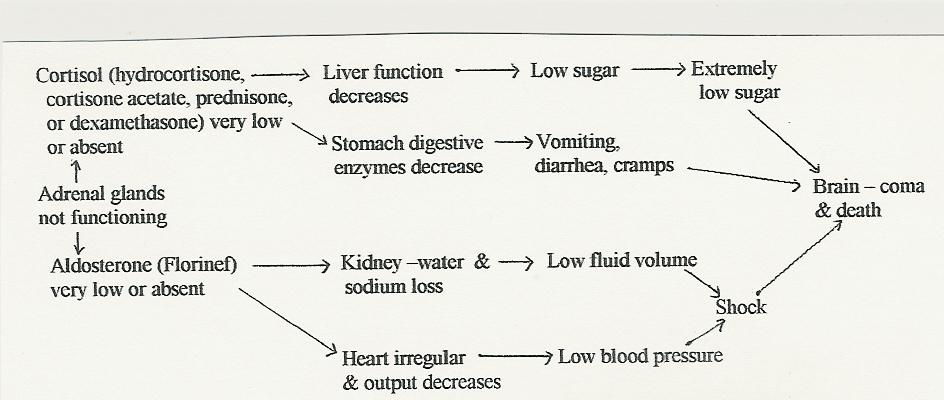
What You Must Know about Adrenal Crisis
I am thankful to MaryO, the founder of Cushing's Help & Support.com and Cushie.com
This adrenal crisis page is a very informative for the patient, the caretakers, and emergency medical folks. Many Cushies print this information and carry it along with their hydrocortisone and Solu-cortef (actovial) meds. They post the information on their refrigerators.
Be sure to read patient stories such as mom Jackie and daughter Sam's situation that went very, very wrong in Robin's post, Stars Go Blue. It brings tears to my eyes every time I read it.
This graphic from Sue explains it all, in a nutshell:
Saturday, June 26, 2010
Did You Know You Have a Bill of Rights as a Patient?
~Melissa (emphasis below mine)
********************
Patients bill of rights

Preamble
The Pituitary Network Association (PNA) is an international non-profit organization for patients with pituitary tumors and disorders, their families, loved ones, and the physicians and health care providers who treat them. PNA was founded in 1992 by a group of acromegalic patients in order to communicate and share their experiences and concerns. PNA has rapidly grown to become the world's largest and fastest growing patient advocacy organization devoted to the treatment and cure of pituitary disorders.PNA is supported by an international network of the world's finest physicians and surgeons. Our goal is to reach every patient who may be forgotten, abandoned, or worse yet, undiagnosed after many years of suffering. We are doing this in three ways: (1) By providing public awareness programs and educational seminars, (2) By assisting the medical community in developing uniform standards for early diagnosis, surgery, radiation, pharmacological treatment and follow-up, and (3) by having interactive Web sites and referral program on these Web sites.
Our Rights
- Pituitary diseases, tumors and the resultant hormonal imbalances shall be recognized as a serious, major public health problem afflicting a large segment of the world's population.
- The financial and intellectual resources of my government and our public and private health services shall be as fairly allocated to me and my disorder as they are to any other life-threatening and life-altering disease.
- I have a right to an early and appropriate diagnosis, treatment, care and medical intervention by the experts in these fields of medicine. I have an inalienable right to be told of - and allowed to use, whenever possible, any and all medications and treatment methods past, present or future -which will complete or assist in my healing.
- Upon completion of any medical evaluation, treatment and care, I am entitled to the emotional and psychological care afforded anyone else with psycho-socially affective disorders.
- I reaffirm my right to be treated completely so I may reclaim my place in society and my family as a fully functioning and contributing member.
- I shall not be discriminated against in my workplace or any other part of society because of my physical, mental or emotional state.
- There shall not be any financial, insurance, job, or promotional stigma attached to my diseases discovery, medical care or emotional recovery. My future life shall only be limited by conditions not under man's ability to rectify.
- My family and coworkers have a right to be informed and counseled about my illness and Its many manifestations. In order for them to understand and accept the temporary limitation to my job performance and my family obligations, they must if possible, become part of my healing environment.
- I reaffirm to the world: I am a valuable member of the society and family of man. My life is too valuable to waste. It is too costly to society and too detrimental to my family to allow me to merely exist at their sufferance and largesse.
- I have the right to be believed! Just because a physician has not yet heard of, or seen, my symptoms before, does not mean they are not real and deserving of medical care and further investigation.
Tuesday, June 15, 2010
Adrenal Crisis Letter

Thanks to you, Robin, for sharing this information on your 365 Days with Cushing's blog. We wish you the best for your upcoming bilateral adrenalectomy (BLA).
~Melissa
COOL DIAGRAM & DOCTORS SHARE WHAT THEY KNOW WITH PATIENTS
I have been doing a lot of research online, and I want to share some of my findings. With a disease this complex, there is always more to learn.
*******************************************
National Adrenal Disease Foundation has the best diagram that I have seen to explain the relationship between the pituitary and the adrenal glands.

*******************************************
The Swedish Neuroendocrine Institute's Pituitary Center in Seattle, Washington has held several conferences recently that are particularly important to pituitary patients. I applaud their efforts, and I am thrilled that they have posted videos of the conferences' presentations online. These very professional videos show the speaker at the podium in a smaller screen and the presentation up close, enabling us to read the "slides" as they present them. WOW--see the speaker and the screen! This makes my day!
It is also refreshing to finally listen in, like a fly on the wall, to many different physicians talking about a disease you have. We typically only see our ONE doctor about our disease. Seeing multiple doctors with in depth knowledge wraps the patients in warmth and comfort like a warm blanket. We need that.
While patients, family, and friends are obvious beneficiaries of these efforts, the real change in medical care will come when physicians see these videos. General practitioners, internal medicine, and ob/gyn doctors often see Cushing's patients first, and many don't realize what they are seeing. Many patients walk first into their local doctors, who may only see an occasional pituitary patient, for help. Unfortunately, these local doctors are often confused about testing, diagnosis, and especially treatment plans, which is not too hard to understand since they only read about Cushing's in one "rare disease" chapter during medical school. Therefore, this online effort will give doctors a chance to learn from experts, and this will undoubtedly improve the road for pituitary patients.
I want to thank the SNIPC for sharing this helpful information with all of us.
A Patient's Road Map to the World of Pituitary Disorders, 2010.
Pituitary Symposium (Patient Presentations), 2009
Seattle Pituitary Center Patient Education Day, 2009
Physician Conference: Advances in Cushing's, 2009
You will find direct links to these presentations, as well as many important others, on this link.
*******************************************
That's all for now. See you next time.
~Melissa