Wife, Mother of 2, post op Cushing's patient dies without medical care during Hurricane Harvey's flooding
Originally published on 9/6/2017.
I'll spare you waiting for the end of the article where it is mentioned and tell you now.
*-*-*-*-*-*-*-*-*-*-*-*-*-*-*-*-*-*-*-*-*-*-*-*-*-*-*-
To my fellow Cushies. I write this especially to you. I am sure that all Cushies grieve with me today and forever in the loss of Casey and so many others. We will add Casey to the list of all those we fight for every day.
Although we see far too many deaths, the Cushing's community will take our shock about every soul lost to this horrific and debilitating disease and fight for more Cushing's awareness for everyone involved in a Cushie's care: patients, patient's families, doctors, endocrinologists, ER physicians, nurses, emergency medical techs, firefighter emergency teams, and any medical professional who can save a Cushie's life from not enough cortisol -- an adrenal crisis -- with a simple $7 injection.


 |
| Photos featured in Houston Chronicle article, 9/5/2017 |
UPDATE (10/17/2018). The New York Times released this story recently about Casey's death after her adrenalectomy on the one year anniversary of Houston getting hit by Hurricane Harvey. It is gut-wrenching. I cried the whole time I read it. Casey should be here with us. Her death was preventable.
As post op Cushies, we have to ask ourselves: Are we prepared for all of life's unexpected emergencies? Do we have plenty of cortisol replacement, hydration drinks, Solu-Cortef vials and syringes?
Right now, we have to BLA sisters Michelle and Kelly are fighting to stay healthy after Hurricane Michael absolutely obliterated their communities near Panama City Beach, FL. They are living without water and electricity, in the Florida heat, as patients who are steroid dependent. They are struggling but they were prepared with extra medicine.
When we tell you that you must be prepared in an emergency, we mean it. We don't want to lose you. Please promise us that you will take care of yourselves.
Originally published on 9/6/2017.
I'll spare you waiting for the end of the article where it is mentioned and tell you now.
"Casey Dailey also was fighting Cushing's disease, a pituitary gland disorder often caused by a tumor creating excess cortisol. She had surgery Aug. 23 and went home the next day. Over the following weekend, she began feeling sick. She vomited, sometimes with blood. Then, she couldn't stand or talk, relatives said. A high fever started Sunday, after floodwaters surrounded her home, and she became unresponsive."
********
I have deep regrets that I never had a chance to know Casey and help her, a fellow Houstonian. My heart just breaks because she never got the chance to get well and to be herself again. Every Cushie dreams of that.
We Cushies send our most heartfelt prayers to everyone who knew and loved Casey.
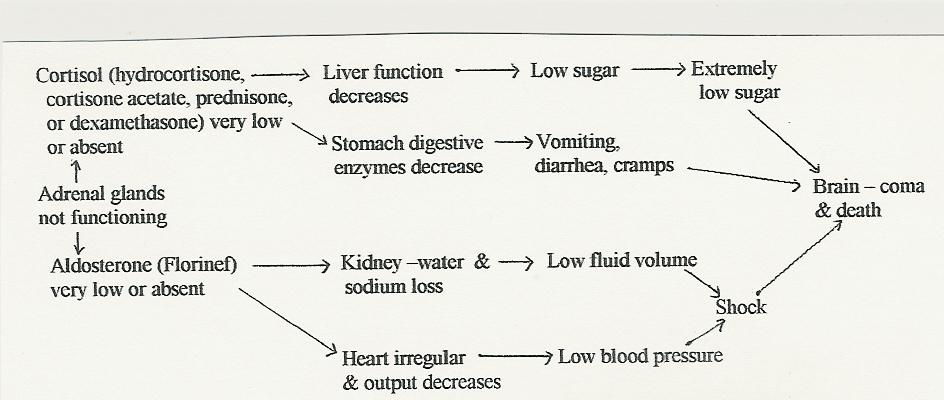
I direct this to all the Cushies who may read this page. The gofundme page mentions Casey died from a post surgery infection. While this seems unrelated to Cushing's, it most certainly is. Infections absolutely and unequivocally lower cortisol. In fact, the body uses cortisol to fight infections. Left without antibiotics and more cortisol, any post op Cushies could die from adrenal crisis. Hurricane Harvey and flooding kept our poor Casey from getting the help she needed. I am calling it adrenal crisis. I am confident that many other seasoned Cushies will see Casey's situation and symptoms and conclude the same. What will prevent you from getting the emergency injection you need? A stubborn endocrinologist who refuses to give you one because you will also be close to the hospital? We've heard many say that. Will it be a traffic jam, being alone when crisis symptoms prevent you from calling for help? We Cushies just never know.
I want to encourage all Cushies to contribute to the fund set up for Casey's family. Every dollar counts. Please mark yourself as a Cushie when you donate. I want the family to see how the Cushing's community steps forward and helps another Cushie's family. I know I am like every Cushie when I say this. I fear every day that this will happen to me. If you share that fear, please contribute even $5, and share this page. Tell others who love you that this could have been you. Ask them to donate, too. Please.
https://www.gofundme.com/dillsdaileyfund
Here is Casey's mother-in-law initial entry on the gofundme page:
My name is Darlene and I am writing this on behalf of my son Wayne Dailey. On August 29, 2017 Wayne tragically lost his wife Casey as a result of the devastating flooding in Houston, TX caused by Hurricane Harvey - shattering their and our lives forever.
Casey was home recovering from major surgery (adrenalectomy) just before the storm and ensuing flooding occurred when she became very ill due to post surgery infection and needed immediate medical attention. We worked fervidly to contact all the emergency rescue organizations to try to get Casey evacuated to emergency medical services. After trying somewhere between 24-48 hours to get rescuers to the family we went to social media pleading for help. We were finally able to get volunteers to try and reach them.
Wayne carried their two young sons, Luke and Ronnie, across the street in chest high water to Casey’s parent's home to leave the boys with them in order to get Casey to emergency medical services as quickly as possible. In the process of the evacuation, Casey stopped breathing and in spite of exhaustive attempts by the volunteers and paramedics to revive her - Casey could not be brought back to life. Wayne was separated from his family by flood waters and could not return to them until the next day. There is so much more to this story and many of the details of the struggle to get the emergency services Casey so desperately needed have been left out.
I cannot even begin to think of all the ways this will impact my son Wayne and two grandsons. Casey was a kind and loving person, a caring mother and wonderful friend to many. She was always willing to help others and reaching out to those she never met. Casey was the glue that kept family and friends together.
Due to the economic conditions and Casey's illness they were already facing financial struggles and did not have life insurance. We are asking for any help you are able give towards immediate and future needs for the family’s many medical and funeral expenses.
We are setting up a fund and bank account where the donations will be deposited and specifically used by Wayne to pay for Casey’s funeral, medical expenses, immediate bills they may have and any unexpected expenses for Luke and Ronnie while Wayne tries to regroup and build a new life for him and his sons.
Our hearts are filled with gratitude for everyone who worked so fervently to get help to Wayne and Casey and for the volunteers who risked their lives to rescue them-there are no words. Any help will go a long way. We extend our heartfelt thanks to all those who can help in this tragic moment that has left us stunned and overwhelmed.
Here is Casey's mother-in-law initial entry on the gofundme page:
My name is Darlene and I am writing this on behalf of my son Wayne Dailey. On August 29, 2017 Wayne tragically lost his wife Casey as a result of the devastating flooding in Houston, TX caused by Hurricane Harvey - shattering their and our lives forever.
Casey was home recovering from major surgery (adrenalectomy) just before the storm and ensuing flooding occurred when she became very ill due to post surgery infection and needed immediate medical attention. We worked fervidly to contact all the emergency rescue organizations to try to get Casey evacuated to emergency medical services. After trying somewhere between 24-48 hours to get rescuers to the family we went to social media pleading for help. We were finally able to get volunteers to try and reach them.
Wayne carried their two young sons, Luke and Ronnie, across the street in chest high water to Casey’s parent's home to leave the boys with them in order to get Casey to emergency medical services as quickly as possible. In the process of the evacuation, Casey stopped breathing and in spite of exhaustive attempts by the volunteers and paramedics to revive her - Casey could not be brought back to life. Wayne was separated from his family by flood waters and could not return to them until the next day. There is so much more to this story and many of the details of the struggle to get the emergency services Casey so desperately needed have been left out.
I cannot even begin to think of all the ways this will impact my son Wayne and two grandsons. Casey was a kind and loving person, a caring mother and wonderful friend to many. She was always willing to help others and reaching out to those she never met. Casey was the glue that kept family and friends together.
Due to the economic conditions and Casey's illness they were already facing financial struggles and did not have life insurance. We are asking for any help you are able give towards immediate and future needs for the family’s many medical and funeral expenses.
We are setting up a fund and bank account where the donations will be deposited and specifically used by Wayne to pay for Casey’s funeral, medical expenses, immediate bills they may have and any unexpected expenses for Luke and Ronnie while Wayne tries to regroup and build a new life for him and his sons.
Our hearts are filled with gratitude for everyone who worked so fervently to get help to Wayne and Casey and for the volunteers who risked their lives to rescue them-there are no words. Any help will go a long way. We extend our heartfelt thanks to all those who can help in this tragic moment that has left us stunned and overwhelmed.
To my fellow Cushies. I write this especially to you. I am sure that all Cushies grieve with me today and forever in the loss of Casey and so many others. We will add Casey to the list of all those we fight for every day.
Although we see far too many deaths, the Cushing's community will take our shock about every soul lost to this horrific and debilitating disease and fight for more Cushing's awareness for everyone involved in a Cushie's care: patients, patient's families, doctors, endocrinologists, ER physicians, nurses, emergency medical techs, firefighter emergency teams, and any medical professional who can save a Cushie's life from not enough cortisol -- an adrenal crisis -- with a simple $7 injection.
I am adding more documents on adrenal crisis below. Please save these to your smart phone, then send them to anyone who spends time with you to save on *their* phone. It can save your life. Please do this.


 Bonnie's Before and after Cushing's pictures