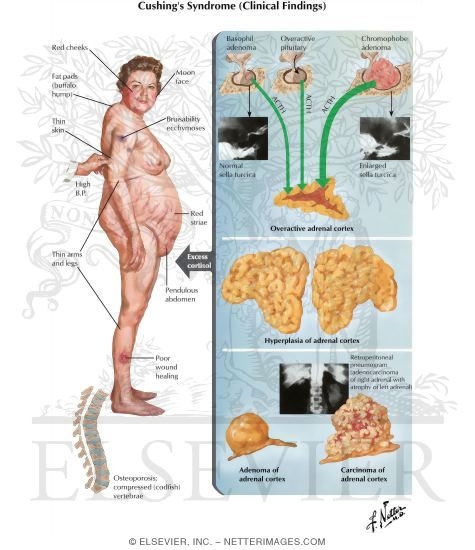
I've noticed that the people who replied have never had BLAs. I'm the moderator of a group with more than 400 patients with Cushing's who have undergone surgical removal of both adrenal glands.
Based on our group, people have BLAs for several reasons.
1) PITUITARY HYPERPLASIA
Patients pursue BLA when pathology from pituitary surgery shows pituitary hyperplasia. This means that the pituitary is covered in abnormal pituitary cells. Since every cell must be removed for pituitary surgery to be successful, there isn't much for the neurosurgeon to do, since further pituitary treatment is unlikely to put the patient into remission.
2) INOPERABLE TUMORS and RADIATION.
The pituitary tumor is inoperable because it is located near the carotid artery or optic chasm. Additional pituitary surgery can lead to stroke if the tumor is located near the carotid arteries or blindness if the tumor is located near the optic chasm. Many docs want to pursue radiation even in these delicate places, but the radiation beams are 2-3 millimeters wide, and the tissue left behind after our 2-10+ millimeter tumors are removed is extremely small. So... that laser is still too wide for my comfort. Would an artist paint a woman's face on a standard canvas with a brush used for painting the side of a house? No, the brush width is too wide to capture the delicate details needed for a portrait. Paint would go where you don't want it, and that is the problem with radiation. On bigger tumors in other parts of the body, 2-3 mm beam sounds small, so radiation risks are lower. For us, there is a risk that radiation misses or overradiates the intended area. A close friend of mine had radiation damage to the hypothalamus when radiation meant for her pituitary missed. She was very ill and couldn't control her body temperature for last five years after radiation. She was extremely hot when cold out and extremely cold when hot out. Think about that: radiation that missed prevented a mammal/ human from doing a totally mammalian thing: self-regulating its temperature of 97-98.6 degrees!
So FYI, from a patient who has been in the Cushing's trenches online for 15 years, radiation is not the cure that doctors say it is. To this day, I fear radiation far more than I ever feared BLA. After seeing what my dear friend went through, in my opinion, it is more dangerous than a BLA. Would the doctors agree? No. They want you to have radiation so they keep their facility success rates higher, oh, and so you have the chance at successful treatment. Plus, they will never personally see and treat 430 BLA patients in their practice. Unfortunately, their recommendations are so often based in fear of the unknown vs what is possible. We BLAers face fear daily and live the best life we can despite it.
Also, a big one—radiation takes 18-60 years to actually work. In the meantime, the patient is still experiencing high cortisol symptoms and horrific, irreversible damage to the body continues. The doctors may put patients on drugs like Korlym, Signifor, or ketoconazole, but all are meant for short-term, band aid use no matter what drug reps or docs being paid to prescribe the drugs say.
So, the questions becomes, how much more damage can your body take? How much more of life are you willing to miss while waiting for the radiation your doctor wants for you to work?
3) PITUITARY HORMONE REPLACEMENT AFTER ANY PITUITARY TREATMENT.
The pituitary is the master gland and it makes many neurotransmitters and hormones that docs can't test for. Each successive pituitary surgery—even performed by skilled neurosurgeons—will damage the pituitary. The more pituitary surgeries means more damage to the normal homeostasis the gland has, even if the surgeons just removes the tumors. I replace most of the pituitary hormones after two unsuccessful pituitary surgeries: two thyroid medicines, growth hormone injections, progesterone, estrogen patch, testosterone, melatonin for sleep. I do not replace vasopressin for diabetes insipidus. I'm trying to get oxytocin testing soon.
PS Patients with adrenal Cushing's who don't have pituitary surgeries prior to BLA tend to do better than the rest of us. That right there shows me the damage that any pituitary surgery does.
4) FERTILITY. Cushing's strikes woman five times more than me, as 4 of 5 Cushies are female. Therefore, fertility is a big topic largely ignored in the consultations female patients have with even the top endocrinologists and surgeons. If you have not had children or were hoping for more children, successive pituitary surgeries reduce your chance to have a child naturally.
Doctors will tell you—as they swore to me—that reproductive endocrinologists can get you pregnant with fertility drugs. Who is gonna pay for that?! Many of us have no money left after Cushing's diagnosis and treatment to pay for the advanced fertility treatments, like egg retrieval and in vitro fertilization, when first line meds like clomid to increase egg production fail to work on a damaged pituitary.
Therefore, fertility expectations must be a consideration for the patient even if the doctors (who have their own families and never had to make this decision) don't consider it or even mention it.
For me, I tried to get pregnant again between my first and second pituitary surgeries when I was still experiencing Cushing’s symptoms. I didn't ovulate because LH and FSH wouldn't budge. My reproductive endocrinologist and nurse gave me clomid to artificially boost follicle (eggs) production and then boost me with meds to release the eggs. Sadly, I never made enough viable eggs. Doctor was expecting 10-25 follicles after the clomid boost, but I struggled top produce 4-5. Month after month, it was the same. I was extremely disappointed.
After six months, my husband and I decided that our family with one child was complete, and it was time to care for myself. So, I moved on to second pituitary surgery.
P. S. Pregnancy is possible after BLA. Many Cushie BLA women get pregnant after BLA. We are up to almost 50 babies! All mamas conceived easily after BLA. In most instances, mothers were shocked at how quickly they became pregnant, and they were ELATED with these pregnancies, especially when many experienced years of infertility caused by Cushing's.
"An AMH test is often used to check a woman's ability to produce eggs that can be fertilized for pregnancy. A woman's ovaries can make thousands of eggs during her childbearing years. The number declines as a woman gets older. AMH levels help show how many potential egg cells a woman has left. This is known as the ovarian reserve. If a woman's ovarian reserve is high, she may have a better chance of getting pregnant. She may also be able to wait months or years before trying to get pregnant. If the ovarian reserve is low, it may mean a woman will have trouble getting pregnant, and should not delay very long before trying to have a baby. You may need an AMH test if you are a woman who is having difficulty getting pregnant. The test can help show what your chances are of conceiving a baby... If you are already seeing a fertility specialist, your doctor may use the test to predict whether you will respond well to treatment, such as in vitro fertilization (IVF)."
By the time I had my BLA, I was 41. Years later, I learned about AMH and had it tested. Mine was ZERO, sadly.
5) NELSON'S. Nelson's occurs in less than 10% of the 430 BLAers on this group. Is 10% still too high for comfort? Of course. However, that means 90% didn't develop Nelson's, and that is a good thing. We have BLAers in the group who have had their BLAs 40-50 years ago to 15-20 years ago to 3-5 years ago to the newly adrenalless. So the group is good for longitudinal studies.
PS I have pituitary tumors 3 and 4 percolating up in my pituitary right now. They aren't producing excess ACTH or pressing against anything, so we will monitor it. Even with those pesky things up north, I still have no regrets about choosing to have a BLA.
6) MEDICATION EVERY DAY. If you had one or two pituitary surgeries, chances are high that you must take medication daily to replace the pituitary hormones lost from those surgeries or just the presence of the tumor(s). For us BLAers, we know that taking cortisol every day is easier to manage than controlling Cushing's excessive cortisol. We know that we control the cortisol; the cortisol doesn't control us. We Cushies know how devastating the pervasive attack of cortisol is on our bodies and minds. For us, BLA provides long-sought-out relief. We get into a daily routine with timers, cortisol pills, aldosterone pills, salt intake (pickle juice, pretzels, broth), and electrolyte drinks. Since the adrenal glands control electrolyte balance, we must stay hydrated daily. We drink lots of water! It becomes a new way of life. We take things easy because we have to. We learn to say no more because we pay the price and the stress will send us into adrenal crisis. And we know that our bodies give us lots of warning. If unheeded and untreated, we go from adrenal insufficiency to adrenal crisis.
Think of it this way: you wouldn't stop driving just because you will have to stop your car at intersections, where you can die if you fail to do so and you can get crushed in the middle of intersections, right? What do you do to keep yourself safe at intersections? You stay alert. Keep your eyes open for the light to change from green to red. You travel at posted speeds. You apply the brake and slowly bring your car to a safe stop in front of the white line. It is the same for adrenal crisis. We take the necessary steps to prevent us from going into the dangerous intersection of adrenal crisis. As long as we commit to doing that every day, just as we do when driving, then we can stay safe.
PS I got a service dog to keep me from adrenal crisis. In the year I have had him, I've been able to stay ahead of adrenal crisis and even adrenal insufficiency, as he alerts me to chemical changes in my body before I am symptomatic. That's so helpful!
7) IRREVERSIBLE. While BLA seems intimidating and overwhelming for others, we BLAers know it saved our lives and gave us back a new life without cushing's. For all its risks, that hope and relief cannot be understated. When asked if they regret their BLA, 7-10 out of 430 say they regret it. Those patients have poor follow up care, don't get tests regularly, and don't push doctors for what they need or don't change doctors to get what they need. Overwhelmingly, people are happy they made the decision to have a BLA. It is definitely a no-going-back decision but most of life's big decisions are. We must make the best decision we can at the time we have to make the decision, weighing benefits vs risks. We step forward and hope for the best. The group is a lifeline to all of us who have to move forward in our daily lives and experience things doctors only read about in medical journals or know second-hand from hearing their patients tell them. Patients know more than doctors about BLA, but we strive to work as partners with our doctors to get the best care. We patients save each other's lives, and I'm grateful to have built this group from one Cushie to 180 BLAers in the past 4.5 years. (edit three years later on 6/30/2021. We now have over 430 Cushies who had BLAs in our facebook group. My guess is that less than 5% or 21 patients regret their BLA and would not recommend it. The others say that it takes some getting used to, and we need to be careful, but zero cortisol is WAY easier to handle than excess cortisol).
You can read more in Dr. LaCroix's article, entitled, ""Bilateral adrenalectomy in the 21st century: when to use it for hypercortisolism?"
Guerin, Carole, David Taieb, Giorgio Treglia, Thierry Brue, André Lacroix, Frederic Sebag, and Frederic Castinetti. "Bilateral adrenalectomy in the 21st century: when to use it for hypercortisolism?". Endocrine-Related Cancer 23.2 (2016): R131-R142.
Therapeutic options available for the treatment of Cushing's syndrome (CS) have expanded over the last 5 years. For instance, the efficient management of severe hypercortisolism using a combination of fast-acting steroidogenesis inhibitors has been reported. Recent publications on the long-term efficacy of drugs or radiation techniques have also demonstrated low toxicity. These data should encourage endocrinologists to reconsider the place of bilateral adrenalectomy in patients with ACTH-dependent etiologies of CS; similarly, the indication of bilateral adrenalectomy is reassessed in primary bilateral macro-nodular adrenal hyperplasia. The objective of this review is to compare the efficacy and side effects of the various therapeutic options of hypercortisolism with those of bilateral adrenalectomy, in order to better define its indications in the 21st century.




.JPG)


