 | |||
| | | Perioperative care of the laparoscopic adrenalectomy patient OR Nurse 2013, November 2010
| |
| |||
| | |


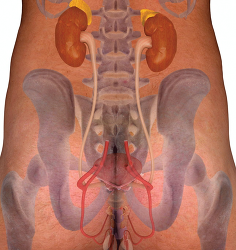
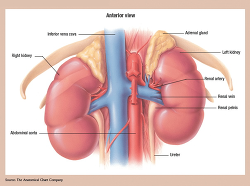
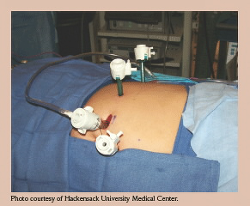
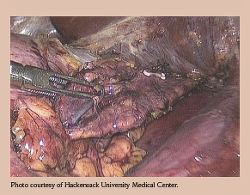
| CE Collection | | |  Go to CE Details Go to CE Details |
For more information about taking CE on NursingCenter, view our Help and Accreditation Information.
| |||
| | | Perioperative care of the laparoscopic adrenalectomy patient OR Nurse 2013, November 2010
| |
| |||
| | |
| CE Collection | | | Go to CE Details |


FDA Puts Strict Limits on Oral Ketoconazole Use
 | ||||||||
|
Webinar: Pituitary Disorders and the FamilyPresented ByJamie L. Banker, Ph.D. Director of Counseling Psychology
Seating is limited, register today!
Date: Friday, November 15, 2013 Webinar InformationChronic illness systemically affects individuals and families, in that the illness impacts the whole system, rather than just the individual with the diagnosis. Health problems can create or exacerbate conflict within a family or support system (Ruddy, Borresen, & Gunn, 2008). This is also the case within families with a family member with an endocrine disorder. Historically, research on medical illness focused mainly on the identified medical patient, but recent literature shows an ever-growing interest in understanding the physical and mental toll those managing and caring for close relatives with a serious illness or disability (Feigin, Barnetz, & Davidson-Arad, 2008). Family systems theories have influenced this turn, as it becomes clear that focusing on a problem with one family member acknowledges only one part of the affected system. In this presentation Dr. Banker will talk about what is meant by the "family system," what is meant by "collaborative' and "integrated" care, Dr. Banker will identify ways pituitary disorders impact the family system, She will discuss ways family members can positively impact healing and learn what can be the role of a "family therapist" in helping families affected by a pituitary tumor or other endocrine disorder. Dr. Banker will also talk about her most recent research connecting the early childhood trauma and pituitary disorders. Learning Objectives
Presenter BioJamie Banker is the Director of Counseling Psychology Masters program and Assistant Professor of Psychology at California Lutheran University in Thousand Oaks California. She is a Licensed Marriage and Family Therapist and has a special interest in integrated behavioral healthcare. She completed a clinical master's degree at University of San Diego and completed her doctoral degree at Virginia Tech. Dr. Banker was a doctoral intern at Dartmouth College Family Medicine Residency. Dr. Banker has worked in three integrated primary care practices as a therapist and a lecturer. She has published scholarly articles and a few book chapter on integrated healthcare. Now her focus is on training Marriage and Family Therapy students to work in integrated behavioral healthcare sites. She is an AAMFT approved clinical supervisor. Dr. Banker's research agenda centers on women's and family's health. It encompasses topics that are both underserved and burgeoning in the fields of psychology, marriage and family therapy, behavioral medicine, and public health. Dr. Banker's primary research interests are collaboration between family therapists and medical professionals, family health and training integrated care professionals. These interests all fall under the larger umbrella of improving individuals' overall healthcare. Her research agenda is focused on decreasing the gap between medical and mental health assessment and treatment. Dr. Banker's current research is on understanding postpartum depression and disorders of the endocrine system from a biopsychosocial model.
| ||||||||
 | ||||||||


Context Adrenal crisis is a life-threatening event that occurs regularly in Addison's patients receiving standard replacement therapy. Patient reports suggest that it is an underestimated and under-managed event.
Objective To assess the frequency of adrenal crisis in diagnosed patients and to understand the factors contributing to the risks of adrenal crisis.
Design We conducted a postal survey of Addison's patients in four countries, UK (n=485), Canada (n=148), Australia (n=123) and New Zealand (n=85) in 2003, asking about patients' experiences of adrenal crisis and their demographic characteristics. In 2006, a shorter follow-up survey was conducted in the UK (n=261).
Method The frequency and causes of adrenal crisis were compared across both surveys. Demographic data from the 2003 survey were analysed to establish the main variables associated with an elevated risk of crisis.
Results Around 8% of diagnosed cases can be expected to need hospital treatment for adrenal crisis annually. Exposure to gastric infection is the single most important factor predicting the likelihood of adrenal crisis. Concomitant diabetes and/or asthma increase the frequency of adrenal crises reported by patients.
Conclusion The endocrinologist has a responsibility to ensure that Addison's patients have adequate access to life-saving emergency injection materials and repeated, practical training sessions in how to use them, while the general practitioner plays a vital role as in arranging prompt emergency admissions.

Please use this request for articles recently published in The Journal of Clinical Endocrinology & Metabolism, Endocrinology,Molecular Endocrinology, or Endocrine Reviews.
Note that all articles published more than 12 months ago back to 1997 are free to all online.
To receive your copy of the requested article, please provide the following information:
NOTE
For additional patient information on hormone-related conditions, free publications and a physician referral, visit The Hormone Foundation at www.hormone.org. The Hormone Foundation, the public education affiliate of The Endocrine Society, serves as a resource by promoting the prevention, treatment and cure of hormone-related conditions through outreach and education.

For editorial see page 3974
Abbreviations:
Yes, we need the Solu-Cortef pen to be easier to dispense. My growth hormone Nutropin is so easy to do. The injectable that saves our life should be just as easy. I'm signing the petition. Will you?
6:02pm Monday 30th September 2013
By Hayley Mortimer
MUM Rachel Pegler has issued a heartfelt plea to SNJ readers to back a petition for health bosses to create an injection pen which could save her little girl's life.
Brimscombe schoolgirl Molly, 14, suffers from a rare condition called hypopituitarism, which can be fatal if levels of the hormone cortisol drop too low and she does not receive an injection in time.
She cannot leave the house without a life-saving kit that contains a syringe, needles and vials of hydrocortisone and her teachers at Thomas Keble School have been trained to give the jab.
Rachel is urging medical bosses to create an 'epi-pen' for this type of illness, which would enable Molly to administer her own injection in an emergency.
She has launched an online petition to get the issue raised in Parliament, which has already attracted more than 2,000 signatures.
"We currently have a very outdated style injection," said Rachel, an artist and illustrator.
"I worry that when alone and close to unconscious my little girl would not even be able to take the top off the glass tube.
"An injection pen could mean life or death."
Cortisol is a chemical hormone produced by the body to manage stress by providing a boost of blood sugar.
When Molly becomes stressed or unwell she is unable to produce enough cortisol and has to rely on extra steroids, which she takes three times a day.
If she is sick or suffers any trauma or injury she needs an emergency injection and hospital treatment.
Molly, who has an older brother Josh, 19, and younger sisters Poppy, 10, and Primrose, one, also has other health problems, which affect her immune system.
"Ultimately I would like my little girl to finally have a normal life," said Rachel.
"Molly is the most cheerful lovely girl. She loves writing scripts and fiction.
"It is such a strain on all of us when she is poorly, we all find it very hard.
"Molly has gone through so much and deserves the knowledge that no mistakes will be made in saving her life in an emergency situation."
To sign the petition go to http://tinyurl.com/o2dwoxp
© Copyright 2001-2013 Newsquest Media Group


